

Short answer: Both systems work well in Las Vegas, but heat pumps have a real edge here. Our winters rarely dip below freezing — the temperature range where gas furnaces lose their efficiency advantage — and a heat pump replaces both your heater and your air conditioner in one unit. That said, if you have an existing gas line, cheap Southwest Gas rates, and a large home that needs fast heat on the handful of cold nights we get, a high-efficiency gas furnace is still a perfectly solid choice. Read on for the full comparison with real numbers so you can decide what makes sense for your home and budget.
Key Takeaways
- Heat pumps are increasingly the smarter choice in Las Vegas because our winters almost never get cold enough to tax them — average December lows hover around 33°F, which is well within a modern heat pump's efficient operating range.
- A heat pump replaces both your heater and air conditioner, which means if you're replacing either one, the combined cost comparison tips strongly in the heat pump's favor.
- The federal Inflation Reduction Act offers up to $2,000 in tax credits for qualifying heat pump installations — a benefit not available for gas furnaces.
- Gas furnaces heat faster and cost less upfront. If you already have a working AC unit and want a simple, cheaper heating-only replacement, a high-efficiency gas furnace ($3,500–$7,000 installed) is a legitimate option.
- Dual-fuel hybrid systems split the difference: heat pump efficiency most of the time, gas backup on the rare nights below 30°F.
How each system works
Before comparing costs and efficiency numbers, it helps to understand what's actually happening inside each system. The two technologies work on completely different principles, which is why they have different strengths and weaknesses.
How a gas furnace works
A furnace burns natural gas to create heat. The combustion happens inside a sealed chamber called the heat exchanger, which gets extremely hot. A blower motor — ideally a variable-speed motor in high-efficiency models — pushes air across that hot heat exchanger and distributes warm air through your ductwork. The combustion byproducts (mostly carbon dioxide and water vapor) vent outside through a flue pipe.
Modern high-efficiency furnaces, called condensing furnaces, capture heat from the exhaust gases before venting them. That's how they reach 96–98% AFUE ratings. AFUE (Annual Fuel Utilization Efficiency) measures what percentage of the fuel you pay for actually ends up as heat in your home. A 96% AFUE furnace converts 96 cents of every gas dollar into heat — the other 4 cents goes up the flue.
The result: very fast, very hot airflow. A furnace blows air at 120–140°F into your ducts. That blast of heat feels immediate and powerful, which is why people in cold climates swear by them. It's also why the furnace runs shorter, harder cycles rather than long, gentle ones.
For more on furnace repair and when things go wrong, see our guide on furnace ignitor problems — one of the most common service calls we get in Las Vegas.
How a heat pump works
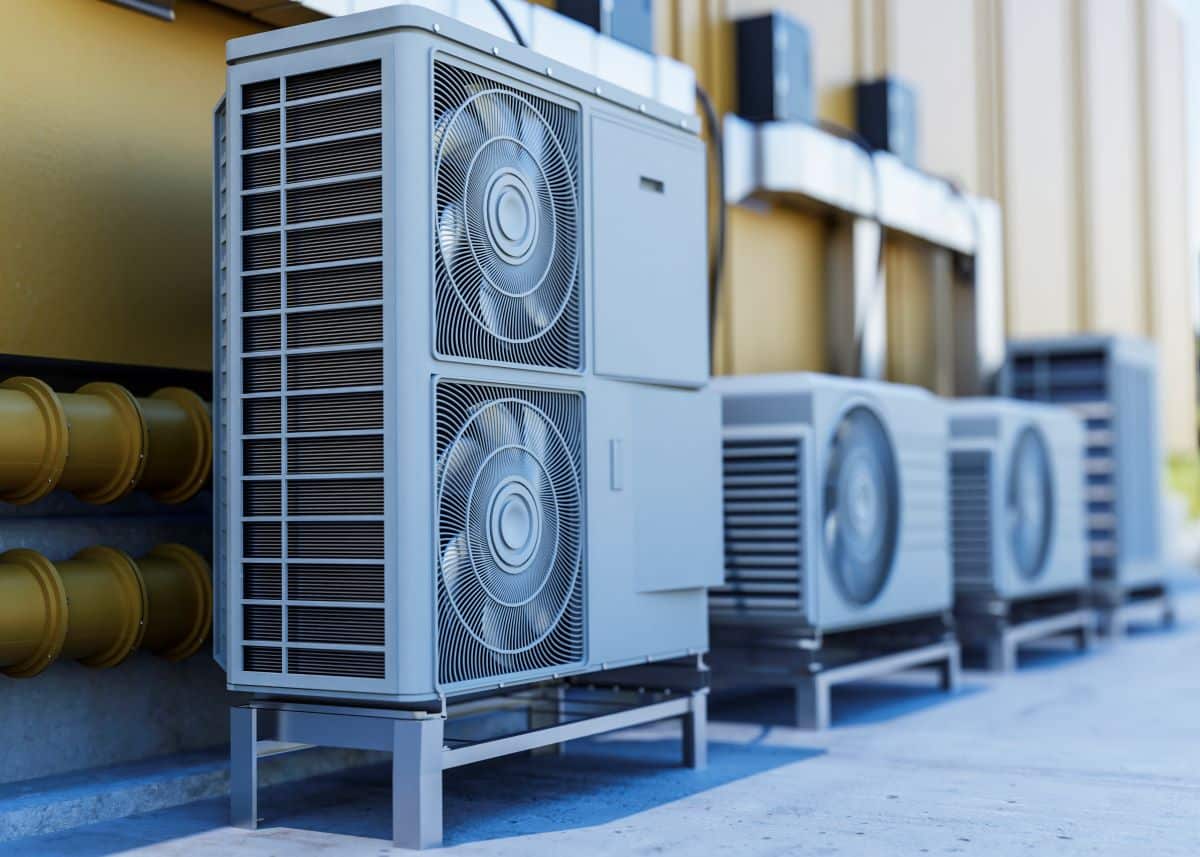
A heat pump doesn't create heat — it moves it. In heating mode, it extracts heat energy from outdoor air (even cold air contains some heat) and transfers it inside using a refrigerant cycle. The outdoor unit pulls heat into the refrigerant through the condenser coil, the compressor pressurizes it (which raises its temperature significantly), and the indoor evaporator coil releases that heat into your air stream.
In summer, the process simply reverses — the system pulls heat from your indoor air and dumps it outside. That's the key insight: a heat pump is essentially a central air conditioner that can run in reverse. The air handler and thermostat control both modes from the same unit.
Because a heat pump moves rather than generates heat, it can deliver 2–4 units of heat energy for every unit of electrical energy it consumes. That's measured as HSPF (Heating Seasonal Performance Factor) for heating and SEER rating for cooling. A heat pump with an HSPF of 10 is delivering roughly 10 BTUs of heat per watt-hour of electricity — far more efficient than any electric resistance heater (which maxes out at 1:1) and competitive with gas when you factor in gas prices versus electricity rates.
Modern cold-climate heat pumps maintain solid HVAC efficiency down to temperatures of 5°F or even lower. In Las Vegas, that's complete overkill — we almost never see those temperatures. Our 99% design temperature (the outdoor temperature we experience 99% of heating hours) is around 28–32°F depending on your neighborhood. Standard heat pumps handle that easily without a sweat.
Want to learn more about how heat pump installation works? Visit our heat pump installation page for details on what to expect.
Efficiency ratings explained
Comparing efficiency between a furnace and a heat pump is an apples-to-oranges exercise — they measure fundamentally different things. Here's how to think about it clearly:
AFUE (for gas furnaces): Measures what percentage of fuel energy becomes heat. Standard furnaces run 80% AFUE; high-efficiency models run 96–98% AFUE. The remaining percentage goes up the flue as exhaust.
HSPF2 (for heat pumps — heating mode): Measures the ratio of heating output to electrical input over an entire heating season. Current minimum standards require HSPF2 of 7.5 for split-system heat pumps. Quality units run 8.5–10+ HSPF2. An HSPF2 of 10 means roughly 10 BTUs of heat for every watt-hour of electricity.
SEER2 (for heat pumps — cooling mode): Measures cooling efficiency. This matters a lot in Las Vegas, where we run AC for 6+ months. Current minimum is 14.3 SEER2 in our climate zone; premium units reach 20+ SEER2.
The efficiency story changes based on your local energy prices. At current rates — Southwest Gas natural gas at roughly $1.10–$1.25 per therm and NV Energy electricity at $0.11–$0.13 per kWh — a high-HSPF heat pump and a 96% AFUE furnace come close to parity for heating costs in Las Vegas. The heat pump generally edges out slightly in per-BTU delivered cost during mild weather, while the gas furnace holds a slight edge on the very cold nights when the heat pump has to work harder.
For a deeper look at efficiency and what it means for your bills, check our energy savings calculator and our HVAC buying guide.
Upfront cost comparison
Let's talk real numbers. These are installed costs in the Las Vegas market as of early 2026, including equipment, labor, permit, and a standard refrigerant line set or gas line connection where needed.
| System Type | Equipment Tier | Installed Cost Range | Notes |
|---|---|---|---|
| Gas Furnace (only) | 80% AFUE standard | $3,500–$5,000 | Heating only; AC separate |
| Gas Furnace (only) | 96–98% AFUE high-efficiency | $5,000–$7,000 | Heating only; AC separate |
| Heat Pump (split system) | 14.3–16 SEER2 standard | $5,000–$8,000 | Heating AND cooling included |
| Heat Pump (split system) | 18–22 SEER2 premium | $8,000–$12,000 | Heating AND cooling; eligible for $2,000 tax credit |
| Dual-Fuel Hybrid System | Heat pump + gas furnace | $9,000–$15,000 | Best of both; higher upfront cost |
A few things stand out when you look at this table carefully. The gas furnace looks cheaper — and it is, for heating alone. But if your AC is also aging or you're doing a full system replacement, compare the full picture. A heat pump at $6,000–$9,000 replaces both systems. If you'd spend $4,000–$6,000 on a furnace and then need a $4,000–$6,000 AC replacement in a few years, the math changes fast.
For detailed cost breakdowns, see our furnace replacement cost guide and our AC replacement cost guide for Las Vegas. You can also check our pricing guide for current market rates.
If upfront cost is the main barrier, explore our HVAC financing options — we have programs that can make a premium heat pump system accessible for as little as $0 down. Our financing guide for every credit score covers what's available whether your FICO is 580 or 800.
Operating costs in Las Vegas: the real math
Let's run actual numbers for a typical Las Vegas home — say a 2,000 square foot house in Henderson or Summerlin. We'll assume 800–1,000 heating hours per year (Las Vegas has a very short heating season compared to most of the country).
Assumptions used:
- Home heating load: roughly 40,000 BTU/hour at design conditions
- Annual heating hours: ~900 (Las Vegas's relatively mild winters)
- Southwest Gas rate: approximately $1.15/therm (current 2026 rate)
- NV Energy electricity rate: approximately $0.12/kWh (residential average)
- 80% AFUE gas furnace vs 96% AFUE high-efficiency gas furnace vs heat pump with HSPF2 of 9.0
Annual heating cost estimate:
- 80% AFUE gas furnace: roughly $420–$480/year in heating fuel costs
- 96% AFUE gas furnace: roughly $350–$400/year in heating fuel costs
- Heat pump (HSPF2 9.0): roughly $280–$360/year in electricity for heating
Wait — those numbers are pretty close. And that's the honest truth: in Las Vegas, the operating cost difference between a good gas furnace and a good heat pump for heating alone is not dramatic. We're talking maybe $50–$100 per year in favor of the heat pump in most scenarios. That's because our heating load is so modest — we just don't run our heaters that much compared to someone in Denver or Chicago.
Here's where the real money story lives: cooling season.
In Las Vegas, we run our AC for roughly 2,500–3,000 hours per year — more than three times our heating usage. A heat pump's cooling efficiency (SEER2 rating) determines your largest energy cost. A 20 SEER2 heat pump versus a 14 SEER2 air conditioner can save $200–$400 annually on cooling alone in our climate. That's where you see real payback on a premium heat pump system.
Use our energy savings calculator to run numbers for your specific home size and current equipment. For additional context on cutting bills, our guide on energy saving tips to reduce HVAC and water heating bills has Las Vegas-specific advice. If you're leaning toward a heat pump, our heat pump vs. central AC comparison breaks down the cooling-season differences that matter most for your electricity bill.
The heat pump's huge advantage: it replaces your AC too
This point deserves its own section because it's the biggest factor in most Las Vegas homeowners' decisions.
When you buy a heat pump, you're not just buying a heater. You're buying a complete year-round comfort system. One outdoor unit, one indoor air handler, one set of refrigerant lines, one system to maintain. In a climate where we use our AC hard for six months and our heater lightly for three, having one integrated system makes tremendous practical sense.
Consider these scenarios:
Scenario A — Your furnace dies in December: You need heat now. You could replace just the furnace for $4,000–$5,500. But your AC unit is also 10 years old. A heat pump replacement does both for $7,000–$10,000 — and you never have to replace the AC separately. Plus you get the $2,000 federal tax credit.
Scenario B — Your AC dies in July: Same logic. You could replace just the AC for $4,000–$6,000. But your furnace is aging too. A heat pump handles both, eliminates the upcoming furnace replacement, and qualifies for the tax credit.
Scenario C — New construction or gut renovation: Builders in Summerlin and Henderson are increasingly defaulting to heat pumps for exactly this reason. One system, simpler installation, dual function, tax credit eligible. It just makes economic sense when you're starting from scratch.
Explore our heat pump replacement service page and our heat pump installation page for what the process looks like. For ongoing care, our heat pump maintenance program keeps them running at peak efficiency.
Federal tax credits and rebates
The Inflation Reduction Act of 2022 changed the financial calculus for heat pumps significantly, and the credits are still active for 2026. Here's what you need to know:
Section 25C Energy Efficient Home Improvement Credit:
- Up to $2,000 per year for qualifying heat pumps (30% of equipment and installation costs, up to the $2,000 cap)
- Applies to air-source heat pumps that meet ENERGY STAR requirements
- This is a tax credit, not a deduction — it reduces your tax bill dollar-for-dollar
- The credit resets annually, so you can claim it in multiple years for different improvements
- Gas furnaces do not qualify for this credit
What this means in real dollars: A $9,000 heat pump installation qualifies for a $2,000 credit, bringing your net cost to $7,000. Compare that to a $5,500 gas furnace with zero credits. The gap is smaller than it appears.
There may also be additional rebates available through NV Energy's energy efficiency programs, which periodically offer incentives for qualifying HVAC equipment. These change, so check current availability when you're ready to buy.
For complete details on federal energy credits and how to claim them, visit our tax credits page or check the official guidance at IRS.gov — Energy Efficient Home Improvement Credit.
ENERGY STAR certification is a good benchmark for qualifying equipment. You can search qualified heat pumps at ENERGY STAR's heat pump product list. Performance specifications are also verified through AHRI (Air-Conditioning, Heating, and Refrigeration Institute), the industry standard for certified ratings.
Lifespan and maintenance differences
How long each system lasts — and what it costs to keep it running — affects the total cost of ownership over time.
Gas furnace lifespan: A well-maintained gas furnace typically lasts 18–25 years. In Las Vegas, where we use our furnaces lightly (just a few months per year at moderate demand), they often hit the high end of that range. Fewer operating hours means less wear. The main maintenance items are annual tune-ups, filter changes, and occasional ignitor or flame sensor replacements. Check our furnace ignitor guide if you're seeing starting problems.
Heat pump lifespan: Heat pumps typically last 15–20 years. Here's the nuance for Las Vegas: because your heat pump runs year-round — heating in winter, cooling in summer — it accumulates more operating hours than a furnace-only system. That's a real consideration. However, modern heat pumps are designed with this in mind, and the components (especially variable-speed compressors in premium units) are built for long-cycle durability.
Maintenance comparison:
- Gas furnace: Annual heating tune-up ($80–$150), filter changes every 1–3 months, occasional ignitor replacement ($150–$300). If it's furnace-only, no maintenance needed in summer. Our furnace repair service handles any issues that come up.
- Heat pump: Two seasonal tune-ups recommended (spring for cooling, fall for heating — $150–$250/year), filter changes, coil cleaning, refrigerant check. Because it operates year-round, you'll want twice-yearly professional service. Visit our heat pump maintenance page for service plans. If something does go wrong, our heat pump repair team is available.
For gas furnaces, the other long-term cost risk is heat exchanger failure. A cracked heat exchanger is a safety issue (it can allow combustion gases into your living air) and typically costs more to repair than replace — it's often what triggers furnace replacements on older systems. Visit our furnace replacement page for guidance on when repair vs replace makes sense, or our furnace installation page if you're moving forward with a new system. If you're facing both a furnace and AC replacement at the same time, our guide on replacing your AC and furnace together explains why bundling the project often makes more financial sense.
For full maintenance and ownership cost guidance, see our heating replacement hub and our heating services overview.
The dual-fuel hybrid option
If you want the best of both worlds — heat pump efficiency for most of the year, gas furnace reliability for the handful of truly cold nights — a dual-fuel hybrid system is worth considering.
Here's how it works: you install both a heat pump and a gas furnace together. The system's controls automatically use the heat pump when outdoor temperatures are above a "balance point" (typically 30–35°F), and switch to the gas furnace when it drops below that point. The heat pump handles the majority of Las Vegas winter nights (where lows average 33–45°F through December and January). The furnace kicks in only when temperatures drop to near-freezing.
Why it makes sense in Las Vegas: We have very few hours per year below 30°F. The NOAA data for Las Vegas shows we average fewer than 20 days per year where temperatures reach 32°F or below, and most of those nights only touch freezing briefly. A heat pump handles 90%+ of our heating hours efficiently, and the gas furnace provides comfort assurance on those rare very cold stretches.
Dual-fuel cost consideration: The system costs more upfront ($9,000–$15,000 depending on equipment tier) and you'll maintain both a gas line and electrical service. But the heat pump portion still qualifies for the $2,000 federal tax credit. For larger homes (2,500+ sq ft) or homeowners who feel strongly about heating speed and reliability, it's a compelling middle ground.
Who should consider dual-fuel:
- Homes with existing gas lines where removing them would be costly
- Homeowners who had discomfort with heat pump-only systems in previous homes (often from colder climates)
- Larger homes where the faster, hotter output of gas furnace backup is appreciated on cold snaps
- Properties in higher-elevation areas of Las Vegas/Henderson where temperatures run slightly cooler
Why Las Vegas is perfect for heat pumps
Here's something most homeowners don't realize: Las Vegas is genuinely one of the best climates in the country for heat pump systems. Let us explain why.
Heat pumps lose some efficiency as outdoor temperatures drop. At 47°F, a modern heat pump might have a coefficient of performance (COP) of 3.5 — meaning it delivers 3.5 units of heat per unit of electricity. At 17°F, that same unit might drop to a COP of 1.8. In Minneapolis or Denver, that efficiency drop matters a lot, because they spend hundreds of hours at brutal temperatures. You need a system that performs well in extreme cold.
In Las Vegas? Our typical December-February temperatures:
- Average December high: 57°F
- Average December low: 37°F
- Average January low: 33°F (our coldest month)
- Days below 28°F: fewer than 5 per year on average
We spend essentially zero hours in the temperature range where heat pumps truly struggle. Our "cold" weather is what people in Chicago would call "nice fall day." A standard heat pump operates at high efficiency throughout virtually our entire heating season. You're getting the best of what heat pump technology offers, with almost none of the drawbacks that give them a bad reputation in colder climates.
This is why you're seeing new construction in Summerlin, Henderson, and Centennial Hills increasingly spec'd with heat pumps as standard equipment. The builders know the math. In a cooling-dominated climate like ours, a high-SEER2 heat pump is the most cost-effective way to handle both seasons efficiently.
For more on heat pump performance specifically in desert climates, see the U.S. Department of Energy's heat pump guidance, which includes regional performance data.
Full side-by-side comparison table
| Factor | Gas Furnace | Heat Pump | Winner (Las Vegas) |
|---|---|---|---|
| Upfront cost (heating only) | $3,500–$7,000 | $5,000–$12,000 | Furnace |
| Upfront cost (heating + cooling) | $8,000–$14,000 (furnace + AC) | $5,000–$12,000 (all-in-one) | Heat Pump |
| Annual heating cost | $350–$480/yr (96% AFUE) | $280–$360/yr (HSPF2 9+) | Heat Pump (slight edge) |
| Annual cooling cost | N/A (AC separate) | Varies by SEER2; premium units save $200–$400/yr vs standard AC | Heat Pump |
| Heating efficiency rating | 80–98% AFUE | HSPF2 7.5–10+ (200–300%+ efficient) | Heat Pump |
| Heating speed/comfort feel | Fast, hot air (120–140°F) | Gentler, steady airflow (90–110°F) | Furnace (subjectively warmer feel) |
| Federal tax credit | None | Up to $2,000 (IRA 25C credit) | Heat Pump |
| Typical lifespan | 18–25 years | 15–20 years | Furnace (longer) |
| Annual maintenance cost | $80–$150/yr (1 tune-up) | $150–$250/yr (2 tune-ups) | Furnace (cheaper to maintain) |
| Requires gas line | Yes | No (electricity only) | Heat Pump (more flexible) |
| Performance in extreme cold | Consistent down to 0°F+ | Excellent above 25°F; reduced below that | Tie in Las Vegas (rarely below 25°F) |
| Systems it replaces | Heating only | Heating AND cooling | Heat Pump |
| Environmental impact | Combustion emissions | No combustion; lower carbon footprint (especially as grid greens) | Heat Pump |
Decision matrix: which system fits your situation?
Every home is different. Here's a practical guide based on the most common scenarios we see in Las Vegas:
Choose a heat pump if...
- You're replacing both your heating and cooling system. This is the clearest case. A heat pump costs less than buying a furnace and a separate AC unit combined, and you get the $2,000 tax credit on top of that.
- You're in new construction or a major renovation. No existing systems to work around. Heat pumps are the economical choice for dual-function comfort.
- Your home doesn't have a gas line (or adding one would be costly). All-electric heat pumps require no gas infrastructure.
- You want lower carbon footprint. If environmental impact matters to you, heat pumps produce no combustion emissions at the unit level and get cleaner as NV Energy's grid adds renewable generation.
- Your current AC is failing and your furnace is also old. Do both replacements at once with a heat pump and save on combined system cost.
- Energy efficiency and long-term bill savings are your priority. Premium heat pumps with high SEER2 ratings offer the best cooling efficiency in our hot Las Vegas summers — that's where the real operating savings stack up.
Choose a gas furnace if...
- You need heating only and your AC is relatively new. If your air conditioner is 5 years old or less and in good shape, a standalone furnace replacement makes sense. No need to replace working equipment.
- Your budget is tight right now. A standard 80% AFUE furnace is the most affordable path to getting reliable heat. At $3,500–$5,000 installed, it's significantly cheaper upfront than a heat pump.
- You strongly prefer the "blast of hot air" feel. Some people just prefer the way forced-air gas heat feels — that immediate, very warm airflow. Heat pumps produce comfortable heat, but it's gentler and doesn't blow as hot. This is a real comfort preference and it's valid.
- Your home is very large (3,000+ sq ft) and you want maximum heating capacity. Gas furnaces have high BTU output that can heat large homes quickly, even on the occasional very cold Las Vegas nights.
- You already have a high-efficiency gas furnace that's working fine. Then this question doesn't apply to you yet — repair it and revisit at replacement time.
Consider a dual-fuel hybrid if...
- You want maximum efficiency with a gas safety net for rare cold snaps.
- You have an existing gas line and want to keep it in service.
- You're in a higher-elevation part of the valley (some areas of Henderson run measurably colder).
- You're building a larger home and want the flexibility of both systems without worrying about temperature edge cases.
For existing central Las Vegas homes with older systems
If you're in an older home — say, built in the 1990s or early 2000s in central Las Vegas or the older parts of Henderson — you likely have a gas furnace and a separate central AC unit. When one of those systems reaches end of life, you face a choice. Here's the honest take:
- If the furnace goes first and the AC has 5–7 years of life left: replace the furnace with a high-efficiency 96% AFUE unit and plan for a heat pump next time the AC dies.
- If the AC goes first and the furnace has 5–7 years of life left: consider a heat pump replacement for the AC (your AC tech can set it up so the heat pump and old furnace coexist temporarily). You get cooling efficiency now and heating coverage built in.
- If both are aging (10+ years, both systems): replace both at once with a heat pump. The combined replacement cost math works strongly in the heat pump's favor.
Our team at The Cooling Company can look at your specific systems and give you an honest assessment. We'll tell you what we'd do if it were our house — no upselling, no pushing the more expensive option just because. Call us at (702) 567-0707 or visit our heating services hub for more information.
If you want to do deeper research before calling, our comprehensive new AC system buying guide walks through every consideration in detail. Our furnace replacement cost guide has current Las Vegas market pricing for furnace-specific jobs.
Need HVAC Service in Las Vegas?
The Cooling Company provides expert HVAC service throughout Las Vegas, Henderson, and North Las Vegas. Our licensed technicians deliver honest assessments, upfront pricing, and reliable results.
Call (702) 567-0707 or visit heating replacement, heat pump installation, furnace repair, or AC installation for details.
Neighborhoods we serve
- Summerlin, The Lakes, and Queensridge
- Henderson, Green Valley, and Anthem
- North Las Vegas, Aliante, and Centennial Hills
- Spring Valley, Paradise, and Winchester
- Downtown Las Vegas, Rancho, and Arts District
Sources and further reading
- U.S. Department of Energy — Heat Pumps
- IRS.gov — Energy Efficient Home Improvement Credit (Section 25C)
- ENERGY STAR — Certified Heat Pumps
- AHRI Directory — Certified HVAC Equipment Ratings
- Southwest Gas — Current Nevada Residential Rates