

Short answer: New construction HVAC in Las Vegas is the highest-stakes HVAC decision you will ever make — the system selected at construction will define your comfort and energy costs for the next 15-20 years. The most common mistake is accepting the builder's included system without understanding what it is: typically a minimum-code, single-stage unit that will struggle in Las Vegas summers and cost $300-$600 more per year in electricity than a premium alternative. Upgrading from builder-grade to a two-stage or variable-speed system at construction costs $2,000-$8,000 — a fraction of what you would spend replacing it at year 7-10 when it fails early. Manual J load calculations, proper duct design, and equipment selection are all areas where Las Vegas new construction regularly falls short. Call The Cooling Company at (702) 567-0707 for a pre-construction consultation or independent review.
Key Takeaways
- Oversizing is the #1 new construction HVAC mistake: Builders frequently install systems that are 1/2 to 1 full ton oversized, based on rules of thumb rather than Manual J load calculations. Oversized systems short-cycle, fail to dehumidify during monsoon season, wear out faster, and cost more to operate.
- Builder-grade vs. premium is a real and significant distinction: Builder-grade HVAC is typically a minimum SEER2 single-stage system with standard aluminum coils and no enhanced durability features. Upgrading to a two-stage or variable-speed system at construction costs $2,000-$8,000 and reduces annual energy costs by $200-$600 in Las Vegas conditions.
- Duct design (Manual D) matters as much as equipment: Undersized return air ducts, flex duct that is too long or too compressed, and poor register placement are common in builder-grade new construction. These issues restrict airflow, reduce system efficiency, and cause comfort complaints that persist for the life of the home.
- Clark County code requires SEER2 ≥ 14.3 minimum for new construction: This is below the threshold for federal tax credits and well below what Las Vegas conditions demand for reasonable operating costs. Minimum code compliance is the floor, not the goal.
- Zoning systems are most cost-effective to design at construction: Adding a zoning system to a new home during construction costs $1,500-$3,500. Adding it after construction to an existing home costs $3,000-$6,000 and may not be possible without significant ductwork modifications.
- Solar and HVAC integration should be planned together: A new Las Vegas home with a properly sized HVAC system and a right-sized solar installation can achieve near-zero net electricity cost. But this requires coordinating both systems at design phase, not adding solar after HVAC is already specified.
Why New Construction HVAC Is Different in Las Vegas
Building a new home in Las Vegas gives you an opportunity that existing homeowners do not have: you can specify everything about the HVAC system from scratch. The equipment, the ductwork layout, the thermostat, the zoning, the insulation — all of it is chosen and installed before anyone moves in. Done right, the result is a system optimized for Las Vegas's 115°F design day, calibrated exactly to your home's thermal load, and built to last 18-22 years with proper maintenance. Done wrong — which describes the builder-grade default in most new Las Vegas tract homes — the result is 15-20 years of elevated energy bills, premature component failure, and comfort complaints that are extremely expensive to correct after the walls are closed.
The Las Vegas new construction market has specific pressures that drive toward HVAC under-specification. Volume builders build on margin — every dollar they save on HVAC (an invisible-to-the-buyer infrastructure item) goes directly to the bottom line. The result is predictable: minimum-code SEER2 systems, rules-of-thumb sizing rather than Manual J calculations, builder-grade ductwork installed for ease of construction rather than performance, and smart thermostat and zoning upgrades offered only as expensive add-ons rather than standard inclusions.
Las Vegas is also one of the most demanding climates in North America for HVAC systems. The 115°F design day temperature means systems operate near their thermal limits for sustained periods. The DOE's building energy data shows Las Vegas as one of the highest annual cooling energy consumption cities in the country. A system that is minimally adequate for code compliance in Las Vegas costs dramatically more to operate than a properly specified premium system — and fails faster under the thermal stress.
This guide covers everything a Las Vegas new-home buyer or builder needs to understand about HVAC system specification, from the fundamentals of load calculation to specific equipment choices, ductwork requirements, zoning design, and the builder upgrade landscape.
The Foundation: Manual J Load Calculation
What Manual J Is and Why It Matters
A Manual J load calculation is the engineering analysis that determines exactly how much heating and cooling capacity a specific building requires on its design day (115°F in Las Vegas for cooling). The result, expressed in BTUs per hour, determines the correct equipment size and ensures the compressor, condenser coil, and evaporator coil are all matched to the actual building load. It takes into account:
- Square footage and ceiling height (volume)
- Orientation (which walls and windows face south, west, north, east)
- Window type, size, and U-value and Solar Heat Gain Coefficient (SHGC)
- Insulation R-values in walls, ceiling, and floor
- Air infiltration rate
- Internal heat gains (occupants, appliances, lighting)
- Local climate data (Las Vegas 115°F design temperature, humidity)
- Shade effects from roof overhangs, neighboring structures, or trees
The output is the design cooling load in BTU per hour — the exact maximum cooling capacity the home needs at the worst conditions it will face.
Manual J is ACCA's (Air Conditioning Contractors of America) standard for residential load calculation, and it is referenced by the International Residential Code (IRC) as the required method for equipment sizing. Nevada's Clark County building code requires Manual J for new construction HVAC permits.
How Most Las Vegas Builder HVAC Fails at This Step
Despite the code requirement, Manual J compliance in Las Vegas new construction is more often a checkbox than a rigorous analysis. We have seen "Manual J" paperwork for Las Vegas tract homes that use default assumptions for insulation levels and window performance that do not match the actual specifications of the home as built. We have seen "sizing" based on square footage rules of thumb — 400-600 square feet per ton — without any input data about the specific home's orientation, window area, or thermal envelope.
The consequences of poor Manual J are most often oversizing. A rule-of-thumb estimate based on 400 sq ft per ton would size a 2,400 square foot home at 6 tons. A proper Manual J for the same home — with proper insulation (R-38 attic), low-E windows, and good air sealing — would likely yield 4-4.5 tons. The builder installs 5 or 6 tons "to be safe," and the homeowner pays for an oversized system for 20 years.
Why Oversizing Is Harmful, Not Safe
Oversized systems short-cycle: they cool the home to setpoint quickly, shut off, and restart frequently. Each start-stop cycle is the most mechanically stressful event the compressor experiences — it is like accelerating and braking a car constantly rather than driving at a steady speed. In Las Vegas heat, short-cycling in an oversized system is a primary mechanism of early compressor failure.
Oversizing also prevents proper dehumidification. Air conditioners remove humidity only when the evaporator coil is cold and running long enough for moisture to condense and drain. A short-cycling oversized system never runs long enough to effectively dehumidify the air. In Las Vegas's monsoon season (July-September), this is directly noticeable as indoor air that feels clammy at 78°F — the system is maintaining temperature but not humidity control.
Finally, oversized systems are less efficient. A 5-ton single-stage system running at 100% capacity for 15 minutes and cycling off uses more electricity per unit of cooling delivered than a properly sized 4-ton two-stage system running at low stage for 45 minutes. The variable-speed efficiency advantage is entirely dependent on long, low-capacity operation cycles that oversized single-stage systems cannot achieve.
Getting a Proper Manual J for Your Las Vegas Build
The most important step in new construction HVAC planning is obtaining a legitimate Manual J load calculation using actual building specifications — not rules of thumb. This requires:
- The home's floor plan with dimensions
- Window schedule (size, location, SHGC, U-value of each window)
- Insulation specifications (R-values for ceiling, walls, floor)
- Las Vegas climate data (design temperature 115°F, humidity, solar data)
- Home orientation on the lot
- Internal load assumptions (number of occupants, appliances)
A proper Manual J takes 2-4 hours of engineering time and costs $150-$500 as a standalone service. If you are having the HVAC contractor do the Manual J as part of the installation bid, verify that they are using actual building data, not default assumptions. Ask to see the actual input data used — a good contractor will show you the spreadsheet or software output with your specific home's data entered.
As an independent verification step, consider having a second contractor review the load calculation or perform an independent one. The $150-$300 cost of an independent review is minimal compared to the 20-year consequences of improper sizing.
Ductwork Design: Manual D and Manual S
Why Ductwork Is More Than Connecting Boxes
Ductwork is the circulatory system of your HVAC. It delivers conditioned air from the equipment to every room and returns it back to the air handler for reconditioning. Ductwork that is properly designed — correct duct sizes, appropriate material, minimized length and turns, properly sized registers and returns — allows your equipment to operate at its rated efficiency. Ductwork that is improperly designed throttles airflow, raises static pressure, wastes 20-35% of your conditioning energy, and shortens equipment life.
ACCA's Manual D provides the standard methodology for duct system design, covering duct insulation requirements, sizing, and duct sealing standards. Manual S covers equipment selection based on the output of Manual J and the specific local climate, ensuring the selected SEER2-rated system will actually deliver its rated performance in Las Vegas conditions. These three manuals — J, S, and D — form the complete system specification for a properly engineered HVAC installation.
Las Vegas Attic Ductwork: The Hardest Environment Possible
Las Vegas attic temperatures reach 145-155°F in summer. All conditioned air in a conventionally ducted home passes through this environment on its way to the living space. Every foot of ductwork in a Las Vegas attic represents a heat gain that the air conditioner must work against.
The thermal performance of attic ductwork depends critically on two factors: the insulation level of the duct itself and whether the duct is well-sealed against air leakage. Las Vegas energy code (which follows the International Energy Conservation Code with Nevada amendments) requires minimum R-8 duct insulation for attic runs. This is significantly better than the older R-4 standard but still allows substantial heat gain in a 150°F attic. R-12 insulated flex duct or properly insulated sheet metal ducts reduce heat gain further.
Duct leakage in a hot attic is particularly destructive: conditioned air that leaks out of supply ducts goes directly into the 150°F attic space, contributing to heat gain into the home rather than conditioning it. Air that leaks into return ducts from the attic brings 150°F air directly into the system, raising supply air temperature and reducing cooling efficiency. Duct leakage of 15-25% (common in builder-grade new construction) is equivalent to cooling 150-250 square feet of extra attic space rather than your home.
What Good Duct Design for Las Vegas Looks Like
Minimize attic duct length. The less ductwork that runs through the 150°F attic, the better. Where possible, route ducts through interior walls, sealed attic knee walls, or conditioned spaces. Central air handler placement minimizes duct run length to all areas of the home.
Use rigid sheet metal for main trunks. Flex duct is convenient for installation and appropriate for final connections to registers, but main trunk ducts should be rigid sheet metal for minimum air leakage and structural integrity in extreme attic temperatures. Flex duct used for long main runs is a common builder shortcut that creates permanent airflow problems.
Seal all connections with mastic. Duct sealing with mastic compound (not tape, which fails in heat) at every connection is required by code and essential for performance. Builder ductwork is often sealed with tape that is already beginning to fail by the time the home is occupied. Request written confirmation that mastic is used on all connections and that post-installation leakage testing is performed.
Size supply and return correctly. Undersized return air is one of the most common duct deficiencies in Las Vegas new construction. Insufficient return airflow causes negative pressure in the house, elevated static pressure in the system, and reduced blower performance. Each supply register should have approximately equal return air capacity to balance the system. Many builder plans have one large central return in the hallway — this is inadequate for anything beyond a very small home.
Specify total duct leakage testing. Post-installation duct leakage testing using a duct blaster (pressurization test) confirms that the installed ductwork meets code requirements (typically ≤ 4% total leakage in Nevada). Insist on this test before final walkthrough. The inspector should provide a written test result. If the system fails, it must be re-sealed and re-tested before acceptance.
The Alternative: Completely Sealed and Conditioned Attic
The most effective duct performance solution for a Las Vegas home is eliminating the attic duct problem entirely by converting the attic to a sealed, conditioned space. This involves insulating the roof deck rather than the attic floor, sealing all attic penetrations, and treating the attic as part of the conditioned building envelope. The air handler and ductwork then operate in a space that is 80-85°F rather than 150°F — dramatically reducing duct heat gain and leakage consequences.
Sealed conditioned attics cost $3,000-$8,000 more than conventional attic-insulated construction but can reduce total HVAC energy consumption by 15-25% compared to identical equipment in a conventional ventilated attic. In a new Las Vegas home that will run air conditioning for 3,000 hours per year for 20 years, the investment pays back clearly. This option is available to custom home builders and some semi-custom builders who are willing to work outside their standard construction package.
Equipment Selection for Las Vegas New Construction
What Clark County Code Requires (The Minimum)
Clark County's building code, following the 2021 International Energy Conservation Code (IECC) with Nevada amendments, requires. These minimums apply the EER2 and SEER2 standards that took effect in January 2023:
- Minimum SEER2 of 14.3 for split system air conditioners (single-phase, < 45,000 BTU)
- Minimum SEER2 of 13.8 for split system heat pumps
- Minimum duct insulation of R-8 for attic runs
- Manual J load calculation required for equipment sizing
- Duct leakage testing required (≤ 4% total leakage)
SEER2 14.3 is significantly below the threshold for federal tax credits (SEER2 ≥ 16.0 for central AC, SEER2 ≥ 15.2 for heat pumps) and well below what we recommend for Las Vegas conditions. Minimum code compliance is the bare floor — a homeowner moving into a code-minimum HVAC system should understand they have the minimum allowed, not an appropriate one for Las Vegas.
What We Recommend for Las Vegas New Construction
| System Type | Minimum Recommended | Best Value | Premium |
|---|---|---|---|
| Central AC (cooling only) | Two-stage, SEER2 ≥ 17.0 | Two-stage, SEER2 18-20 | Variable-speed inverter, SEER2 21-28 |
| Heat pump | Two-stage, SEER2 ≥ 16.0, HSPF2 ≥ 8.0 | Two-stage, SEER2 18-21, HSPF2 ≥ 9.0 | Inverter, SEER2 21+, HSPF2 ≥ 10.0 |
| Thermostat | Programmable (7-day) | Smart (Ecobee or Nest) | System-integrated smart (iComfort S30 with Lennox) |
| Air filtration | 5-inch media filter housing (MERV 11) | 5-inch MERV 13 + UV light | Whole-home air purifier (Lennox PureAir) |
Heat Pump vs. Central AC for Las Vegas New Construction
For new Las Vegas home construction, we recommend heat pump systems over central AC with a separate furnace for most homeowners. Heat pumps with inverter compressors and variable-speed motors handle Las Vegas's extreme ambient temperatures better than single-stage alternatives, modulating their output rather than hard-cycling at full capacity in 115°F heat. The reasons are specific to the Las Vegas climate:
Las Vegas winters are mild enough for heat pumps to be primary heating. Heat pumps lose efficiency as outdoor temperature drops below about 40°F. Las Vegas averages only 58 hours per year below 32°F — the threshold where auxiliary heat becomes necessary. The cost penalty of using auxiliary electric strip heat a few dozen hours per year is minimal compared to the year-round benefits of heat pump operation.
No gas infrastructure required. Many newer Las Vegas subdivisions are going all-electric, particularly those in areas away from existing gas line infrastructure. A heat pump handles both heating and cooling with a single system on a single electric circuit — no gas line, no gas appliance, no gas utility account needed.
Better federal incentives for heat pumps. The Section 25C tax credit provides up to $2,000 for qualifying heat pumps versus $600 for central AC. The additional $1,400 in federal incentives partially offsets any equipment cost premium for heat pump models. See our complete 2026 Las Vegas rebates and tax credits guide for full stacking analysis.
One caveat: Heat pump compressors are more complex than standard AC compressors and can cost more to repair. In a Las Vegas environment where compressors already face stress from extreme heat, a premium heat pump from a manufacturer with documented high-ambient performance (Lennox, Carrier, Trane, Daikin) is essential. Budget-tier heat pumps may struggle in sustained 115°F conditions. See our desert extreme heat AC guide for equipment that handles Las Vegas conditions best.
Zoning Systems for Las Vegas New Construction
Why Zoning Matters in a Las Vegas Home
A typical Las Vegas two-story home has a severe thermal imbalance: the first floor, shaded by the second floor and lower to the ground, maintains comfortable temperatures relatively easily. The second floor — with roof directly above, more solar-exposed exterior walls, and hot air rising from the first floor — runs 10-20°F hotter during peak summer afternoons.
A single-zone HVAC system must satisfy both floors from one thermostat. If the thermostat is on the first floor at 78°F, the second floor may be 92°F. If the homeowner raises the set point to cool the second floor to 80°F, the first floor drops to 68°F and everyone on the first floor is cold. This is an impossible compromise with a single-zone system.
Zoning solves this with independent thermostats and motorized dampers that control airflow to each zone. The system can direct more airflow to the second floor during peak afternoon heat and less when the second floor has cooled down, while maintaining independent first-floor comfort control.
Zoning Design Options for New Construction
Option 1: Dedicated zoning system (most common). A single HVAC system with motorized zone dampers in the duct system and separate thermostats for each zone. A central zoning control board coordinates damper positions and system operation based on zone demand. Installation cost at new construction: $1,500-$3,500 depending on number of zones and system complexity. This is the right time to install zoning — adding it after construction requires reopening ductwork and can cost twice as much.
Option 2: Two separate HVAC systems. Some larger Las Vegas homes (3,000+ square feet, two stories) are designed with two complete and independent HVAC systems — one dedicated to the first floor and one to the second floor. This eliminates the zoning control complexity and provides redundancy (one system failure still leaves the other floor conditioned). It costs more in equipment ($16,000-$29,000+ for two systems versus $12,000-$18,500+ for one premium system), but provides better control and redundancy. Standard practice for Las Vegas homes above 3,500 square feet.
Option 3: Variable refrigerant flow (VRF) or ductless mini-split systems. High-efficiency multi-zone ductless systems place individual air handlers in each room or zone, connected by refrigerant lines rather than ductwork. This eliminates duct losses entirely and provides the most granular zone control available. Cost: $17,500-$35,000+ for a whole-home multi-zone ductless system. Best suited for homes where ductwork would be particularly problematic (retrofits) or where maximum efficiency and control are priorities.
Zoning Hardware and Control
At a minimum, a new construction zone system includes. Each zone needs its own thermostat — ideally a smart thermostat with remote sensors — and motorized dampers controlled by a central zone board:
- One thermostat per zone (smart thermostats are strongly recommended — Ecobee works well with most zoning systems)
- Motorized zone dampers in each branch duct leading to each zone
- A zoning control board that coordinates damper positions with system operation
- A bypass damper or variable-speed blower to handle pressure buildup when zones close
Variable-speed blower motors (standard on premium equipment) work best with zoning because they can adjust airflow speed in response to changing zone demand. Single-speed blowers create pressure problems when zones close — all the system airflow tries to push through whatever zones remain open, potentially causing noise, high static pressure, and reduced equipment life. A bypass damper is essential with single-stage equipment and zoning.
Builder-Grade vs. Premium HVAC: The Real Cost Difference
What "Builder Grade" Actually Means
When a production builder in Las Vegas includes "HVAC" in the base home price, they typically mean:
- Minimum SEER2 (14.3-15.0) single-stage air conditioner or heat pump from a mid-tier brand
- Standard aluminum condenser and evaporator coils without enhanced corrosion protection
- Basic programmable or smart thermostat (sometimes a non-programmable)
- 1-inch filter return configuration (often inadequate for Las Vegas dust loads)
- Flex duct throughout (both trunk and branches) for fastest installation
- Single zone controlling the entire home
- One-year builder warranty (after which you own all maintenance and repair costs)
This is a functional system that meets code and will condition the home. It is not a system optimized for Las Vegas conditions, energy efficiency, durability, or comfort. It is a system sized and specified to minimize builder cost while meeting minimum legal requirements.
Upgrade Costs and Benefits: Builder Standard vs. Premium Options
| Upgrade | Builder Baseline | Premium Upgrade | Upgrade Cost | Annual Savings | Payback |
|---|---|---|---|---|---|
| Equipment efficiency | Single-stage SEER2 15.0 | Variable-speed SEER2 21+ | $2,000-$4,000 | $200-$400/year | 5-10 years |
| Smart thermostat | Basic programmable | Ecobee or Nest with sensors | $200-$400 | $100-$250/year | 1-3 years |
| Air filtration | 1-inch MERV 8 filter | 5-inch media filter (MERV 13) | $300-$600 | Reduced maintenance cost, better IAQ | 2-4 years (filter cost savings) |
| Zoning (2-story home) | Single zone | Two-zone system | $1,500-$3,500 | $100-$200/year + comfort improvement | 10-15 years (financial); immediate (comfort) |
| Duct improvements | R-6 flex throughout | R-8 with sealed connections + mastic | $500-$1,500 | $150-$300/year (duct loss reduction) | 3-7 years |
| UV air purification | None | Lennox PureAir or equivalent | $800-$1,500 | Improved IAQ; reduced mold/bacteria in coil | Qualitative — IAQ benefit |
How to Negotiate HVAC Upgrades with a Production Builder
Production builders in Las Vegas typically offer HVAC upgrades through their design center, often at marked-up prices. The upgrade price the design center quotes may be 30-60% higher than the same upgrade obtained independently. Your leverage as a new home buyer:
Negotiate at contract time, not design center time. HVAC system specification should be part of the purchase contract negotiation, not a design center purchase. A builder who includes HVAC upgrades in the base price (or at a reasonable contract credit) before signing is far easier to work with than the design center upgrade path.
Request the specific equipment model included in the base price. Builders should be able to tell you the make and model of the HVAC system included. If they cannot, or if they use phrases like "major brand" without specifics, press for the exact equipment specification. Compare the included model's SEER2 rating, stage count, and coil type against our recommendations above.
Compare upgrade costs against independent contractor pricing. If the builder offers an upgrade from builder-grade to a two-stage Lennox XC20 for $4,500, compare that to what an independent HVAC contractor would charge to install the same equipment in a new construction home (typically $2,500-$3,500 for the equipment upgrade alone, excluding the builder's base equipment that you would be discarding). The price difference tells you whether the builder's upgrade is reasonably priced or heavily marked up.
Consider requesting a credit and hiring your own contractor. Some builders allow buyers to opt out of HVAC installation (take a credit) and hire their own licensed HVAC contractor. This is not always available — many builders have preferred contractor relationships — but it is worth asking about, particularly for custom and semi-custom builds.
Smart Home Integration for New Construction HVAC
Planning for Smart Home Connectivity
New construction is the easiest time to integrate HVAC with smart home systems. Pulling additional low-voltage wiring through walls that are not yet drywalled costs very little. After walls are closed, running new wire costs significantly more or may not be feasible without major construction.
For smart HVAC integration in a new Las Vegas home, plan for:
- C-wire (common wire) at every thermostat location (this is required by almost all smart thermostats — specify it explicitly, as some builders still omit it)
- Ethernet (Cat6) run to each thermostat location if you plan wired network connectivity for the thermostat
- Smart home hub integration planning (Google Home, Amazon Alexa, Apple HomeKit) — most major smart thermostats support all three
- Zoning system compatibility with smart thermostat platforms (Ecobee integrates with most major zoning boards; Nest has more limited zoning compatibility)
Lennox iComfort Integration for New Construction
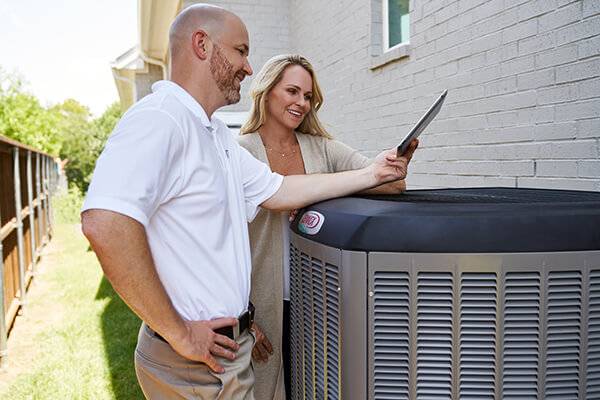
The Lennox iComfort S30 smart thermostat, when paired with compatible Lennox equipment, provides capabilities not available with third-party smart thermostats on other equipment brands. It coordinates with the air handler and outdoor unit at a system level, reading refrigerant pressures and adjusting operation in real time:
- Precise temperature control within ±0.5°F (versus ±1-2°F for most thermostats)
- Humidity control with specific RH targets (valuable during Las Vegas monsoon season)
- System-level diagnostics that display equipment performance data and alert homeowners to efficiency degradation
- Multi-stage optimization that coordinates all stages of a variable-speed system
- Compatible with iHarmony zoning system for up to four zone control
For Las Vegas new construction with Lennox equipment, specifying the iComfort S30 at installation is significantly less expensive than adding it later and ensures full feature compatibility from day one.
Solar Integration with New Construction HVAC
Why Las Vegas Is Ideal for Solar + HVAC Optimization
Las Vegas averages 294 days of sunshine per year — among the highest in the nation. Solar irradiance data for Las Vegas consistently shows among the best solar resource values of any major U.S. city. The combination of high solar generation potential and high HVAC electricity consumption makes Las Vegas one of the best markets in the country for solar + HVAC integration.
A properly sized solar system in Las Vegas can generate enough electricity to cover the majority of HVAC electricity consumption during peak cooling months — which is precisely when the AC is running hardest and solar generation is also at its maximum (July and August, when both are peak). This alignment of peak generation with peak HVAC demand is a Las Vegas advantage that does not exist in cloudy northern climates.
Sizing Solar for HVAC Load
A 2,400 square foot Las Vegas home with a properly specified premium HVAC system (variable-speed 4-ton heat pump, SEER2 21+) uses approximately 800-1,200 kWh per month for cooling in peak summer months. A properly sized solar system for this home — typically 8-12 kW of panels — generates 1,200-1,800 kWh per month in July and August. NV Energy's net metering program credits excess generation against future bills, making summer solar surplus useful in winter months when solar generation is lower.
The key planning principle: HVAC efficiency and solar system size must be planned together. A home with an inefficient builder-grade HVAC system needs a larger (and more expensive) solar installation to offset its consumption. Upgrading HVAC efficiency first (or simultaneously) reduces the solar system size required, often saving more in solar system cost than the HVAC upgrade cost itself.
EV Charging and HVAC: Total Electrical Load Planning
Many Las Vegas new-home buyers plan to drive electric vehicles. The combination of HVAC load and EV charging load needs to be considered when sizing the electrical panel and planning NV Energy service. A home with a 200-amp service panel, a 4-ton premium HVAC system, and a Level 2 EV charger (30-50 amps) should have sufficient capacity for normal simultaneous operation, but adding a second EV charger or upgrading to a 5-ton system requires electrical panel sizing verification.
Plan electrical service and panel size at the same time as HVAC equipment selection — not as separate decisions made by different contractors at different stages of construction.
Common Builder HVAC Shortcuts to Watch For
The 10 Most Frequent Issues We Find in Las Vegas New Construction
- Flex duct used for main trunk runs: Main trunk ducts should be rigid sheet metal for minimum leakage. Flex duct as the primary trunk from the air handler to the branch points is a cost-saving shortcut that creates permanent airflow restrictions and higher leakage rates.
- Insufficient return air: A single central return in the hallway for a 2,500+ square foot home is inadequate. Every room with a supply register should have either a dedicated return or a transfer grille to the main return pathway. Insufficient return creates pressure imbalances and restricts total airflow.
- Compressed or kinked flex duct: Flex duct that is not fully extended, has sharp bends, or is compressed from improper support adds significant airflow resistance. Properly installed flex duct should be fully extended to its rated length, supported every 4 feet, and have sweep bends rather than sharp turns.
- Air handler installed in 150°F attic without conditioned space option: The standard is attic-mounted air handlers and ductwork in unconditioned attic space. We recommend asking about alternatives — attic conditioning, garage installation, or interior mechanical room — that reduce exposure to extreme attic temperatures.
- No mastic on duct connections: Duct connections sealed with tape only (especially the silver foil tape often used by builders) will fail in Las Vegas attic temperatures within 5-7 years. Mastic compound on all connections is required for durable performance.
- Oversized equipment based on rule of thumb: As discussed in the Manual J section, builder sizing based on 400-500 sq ft per ton rather than actual load calculation is common and results in oversized systems with short-cycling problems.
- No whole-house air filtration beyond a 1-inch filter: A single 1-inch MERV 8 filter at the air handler is inadequate for Las Vegas dust loads. Builder-grade installations rarely include upgraded filtration — this is both a comfort and equipment protection issue.
- Refrigerant line insulation not UV-protected: Standard black foam insulation on exterior refrigerant lines will degrade to powder in 4-6 Las Vegas summers. Specify UV-jacketed or foil-jacketed insulation at installation.
- Thermostat placed in poor location: Builder thermostat locations are chosen for wire routing convenience, not thermostat performance. A thermostat near a west-facing window, in a hallway with poor air circulation, or adjacent to an exterior door will read inaccurately and cause the system to short-cycle or over-condition.
- No post-installation duct leakage test results provided: Nevada code requires duct leakage testing, but builders do not always provide the test report to the homeowner. Insist on receiving the duct leakage test report before closing on the home. The report should show total duct leakage percentage — anything above 4% should be corrected before you accept the home.
Getting a Second Opinion Before Construction: What to Look For
Pre-Construction HVAC Consultation
For homeowners building a custom or semi-custom home, a pre-construction HVAC consultation with an independent contractor (not the builder's preferred HVAC contractor) is a worthwhile investment. This consultation should cover:
- Review of the builder's proposed HVAC equipment specification
- Independent Manual J load calculation review (or initial calculation if none exists)
- Duct layout review relative to the home's floor plan
- Identification of upgrade opportunities and cost-benefit analysis
- Zoning recommendations for the specific home layout
- Solar integration planning if solar is planned
Cost: $200-$500 for a thorough pre-construction consultation. This investment can identify issues or opportunities worth far more than the consultation cost. A single equipment upgrade recommendation that reduces annual energy costs by $300 pays back the consultation fee in the first year and continues saving for 20 years.
New Construction Inspection Checklist: HVAC Items
Before accepting a newly completed home, verify the following HVAC items:
- Equipment model numbers and SEER2 ratings match the contract specifications
- Serial numbers are registered with the manufacturer for warranty activation
- Duct leakage test report provided with results ≤ 4%
- Manual J load calculation documentation provided
- Refrigerant line insulation is intact, UV-protected, and fully covering all exterior line sections
- Condenser pad is level and clear of construction debris
- Disconnect box is properly closed and labeled
- All supply and return registers are in place and not blocked by construction material
- Thermostat is operational and programmed correctly
- System operates in both cooling and heating mode
- Condensate drain line drains properly (visible drip at outlet)
- Filter is clean and properly installed (builder sometimes installs during framing and leaves the original filter through months of construction dust)
- All duct access panels are closed and sealed
Frequently Asked Questions
What size AC do I need for a new Las Vegas home?
The only correct answer comes from a Manual J load calculation using your specific home's floor plan, window schedule, orientation, and insulation specifications. Rules of thumb — such as 1 ton per 400 square feet — produce oversized systems in Las Vegas because they do not account for the extreme heat loads from west-facing windows, dark roofs, and poor insulation (or conversely, the reduced loads from high-performance insulation and low-E glass). For a 2,400 square foot single-story Las Vegas home with adequate insulation and quality windows, a proper Manual J typically yields 4-4.5 tons. The same home with poor insulation and large west-facing windows might need 5 tons. Size for your specific home — not a rule of thumb.
Should I get a heat pump or a gas furnace + AC system for a new Las Vegas home?
For most new Las Vegas homes, a heat pump is the better choice. Las Vegas winters are mild (average overnight low of 35-38°F in January, with only 58 annual hours below 32°F), meaning heat pumps operate efficiently through essentially all of the heating season without needing to rely on auxiliary electric strip heat. A heat pump handles both heating and cooling with one system, eliminates the need for a gas furnace and gas line, and qualifies for the federal Section 25C tax credit at up to $2,000 (versus $600 for AC only). The only case where a gas furnace + AC makes more sense is if natural gas service is already at the home, gas heating is significantly cheaper per BTU than electricity in your specific rate scenario, or the home is at very high elevation with sustained cold temperatures (not typical of valley Las Vegas).
What is the typical HVAC cost for a new Las Vegas home?
Builder-included base HVAC in a production-built Las Vegas home typically runs $9,500-$16,500 in actual installed cost (though this is included in the home price, not separately itemized). Custom home HVAC installation costs: $12,000-$21,000 for a single 4-ton system installation in a 2,500 square foot home, including equipment, ductwork, thermostat, and startup. Two-system homes (for two-story, 3,500+ square feet): $21,000-$35,000+. The wide range reflects equipment tier (builder-grade vs. premium variable-speed), duct system complexity, zoning, and custom home design requirements — and a proper installation with correct Manual J sizing and quality ductwork delivers measurably better performance than the same equipment installed to minimum standards. For a new custom home, budget $14,000-$23,000 for a well-specified single-system installation with smart thermostat, quality ductwork, and at least two-stage equipment.
Can I negotiate a better HVAC system with a production builder?
Yes, particularly at contract time. Production builders have more flexibility before the contract is signed than afterward. Key requests: ask for the specific equipment model included and its SEER2 rating. If it is SEER2 15.0 single-stage, ask for the price of upgrading to SEER2 18.0+ two-stage. Compare this price to the energy savings over the home's life — in Las Vegas, a $3,000 upgrade to a significantly more efficient system pays back in 6-10 years in electricity savings. Some builders will negotiate HVAC upgrades as part of the contract (particularly on spec homes that have not yet been built). Design center upgrade pricing after contract is typically the most expensive path.
What duct material should I specify for my Las Vegas new home?
For main trunk runs: rigid insulated sheet metal duct, R-8 minimum. For branch runs to individual registers: flexible duct (flex duct) is acceptable, but specify R-8 minimum insulation, full extension to rated length with proper support every 4 feet, and sweep bends rather than sharp turns. All connections should be sealed with mastic compound (not tape). The builder-grade standard of flex duct for everything including main trunks, with tape-sealed connections, is the minimum code allows — not what performs well in Las Vegas attic conditions. Post-installation duct leakage testing to ≤ 4% should be required by contract and the test report provided before closing.
How does Clark County code affect HVAC for new construction in Las Vegas?
Clark County follows the 2021 International Energy Conservation Code (IECC) with Nevada state amendments. Key HVAC-related requirements for new residential construction: minimum SEER2 14.3 for split system AC (single-phase, cooling capacity < 45 KBTU); Manual J load calculation required; Manual D duct design required; duct leakage testing required with ≤ 4% of system airflow total leakage; minimum R-8 duct insulation for attic-mounted ducts; and air barrier requirements throughout the building envelope. These are minimums — meeting code is the floor, not the target for a home intended to be comfortable and energy-efficient in Las Vegas conditions for 20 years.
When should I get an independent HVAC inspection on my new Las Vegas home?
Before closing on the home. The builder's HVAC inspection is performed by the building department, which verifies code compliance — not performance optimization. An independent HVAC contractor inspection before closing verifies: that the installed equipment matches the contract specification, that the duct leakage test was actually performed and the results are acceptable, that refrigerant charge is correctly set, that all components are functioning, and that the installation quality (insulation, mastic sealing, airflow balance) meets professional standards. Cost: $150-$350 for a pre-close HVAC inspection. Deficiencies found before closing can be negotiated for correction by the builder. Deficiencies found after closing are your problem and your cost.
Related Resources and Professional Services
For new construction home buyers evaluating what premium equipment is worth the investment in Las Vegas conditions, our guide to why Las Vegas destroys AC units explains the specific environmental stressors that make higher-quality equipment matter more here than in most cities. Our desert extreme heat AC rankings identify which specific systems handle Las Vegas conditions best at each price tier.
For rebate and tax credit details that affect the net cost of premium equipment upgrades, see our complete 2026 Las Vegas HVAC rebates and tax credits guide. For the ongoing maintenance that will keep your new system performing optimally through its full lifespan, our Las Vegas annual maintenance checklist provides the complete framework.
Call (702) 567-0707 to schedule a pre-construction HVAC consultation or a new home HVAC inspection. We provide independent load calculations, equipment recommendations, and installation services for custom and semi-custom Las Vegas new construction. Visit our AC installation and heat pump installation pages for service details.
Why Choose The Cooling Company for New Construction
The Cooling Company is a family-owned Lennox Premier Dealer that has guided Las Vegas homebuilders and new-construction buyers since 2011. Our certified technicians perform independent load calculations, equipment reviews, and pre-construction consultations to ensure your new home's HVAC is right-sized and properly specified for desert conditions. With 780+ Google reviews and a 4.8/5 rating, we've earned the trust of dozens of local builders and hundreds of homeowners. Licensed, bonded, and insured (NV License #0082413), we deliver transparent, upfront pricing and guarantee the workmanship on every installation.
Call (702) 567-0707 to schedule a pre-construction HVAC consultation or a new home HVAC inspection. Visit our AC installation and heat pump installation pages for service details.