

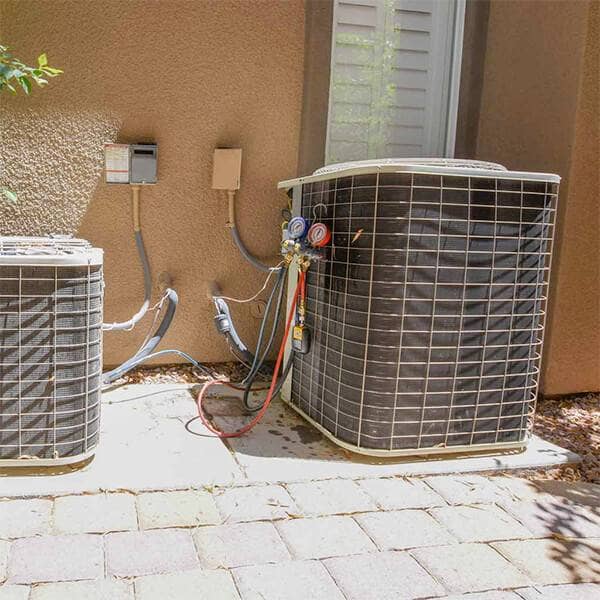
Short answer: Las Vegas homeowners should schedule a professional AC tune-up between March and May — ideally in March or April. By June, HVAC companies are booked 3 to 4 weeks out for non-emergency calls, and the first heat wave of summer will stress every component your system has. A pre-season tune-up runs $89 to $150 and catches problems before they become $300-to-$3,000 emergency repairs in 110-degree heat. The professional 22-point inspection combined with the DIY prep tasks in this guide represents the minimum annual preparation every Las Vegas AC system requires to survive summer reliably.
Ready to schedule before the rush? Call (702) 567-0707 or visit our AC maintenance page to book your spring tune-up.
Las Vegas homeowners have a narrow and specific window to prepare their air conditioning systems for summer: roughly March 1 through May 15. Miss that window and you will be scheduling your tune-up in competition with thousands of other homeowners who also waited, dealing with weeks-long backlogs, and — in the worst case — discovering a preventable problem during the first heat event of the year when it becomes an emergency.
This is not a guide for mild-climate homeowners who can treat AC maintenance as optional. In Las Vegas, where your system runs 2,000 to 2,700 hours per year in some of the most punishing operating conditions in the country, annual professional maintenance is not optional — it is the difference between a system that survives the summer intact and one that fails at 3 PM on a 115-degree Thursday.
This guide covers the complete professional tune-up checklist (all 22 points), the DIY tasks every homeowner can complete themselves, the cost comparison between preventive maintenance and emergency repair, and the specific failure modes that inadequate maintenance causes in Las Vegas desert conditions.
Key Takeaways
- Book your tune-up in March or April. HVAC companies in Las Vegas are typically booked 3 to 4 weeks out by mid-June. Pre-season tune-ups are scheduled within days and cost significantly less than peak-season service calls.
- Las Vegas AC systems need more maintenance than national averages. Desert dust, extreme heat, UV radiation, and monsoon humidity accelerate component wear. An annual tune-up in Las Vegas prevents 2 to 3 times the failures compared to a tune-up in a moderate climate.
- A $89-$150 tune-up prevents $300-$3,000+ emergency repairs. The most common failures caught during a tune-up — low refrigerant, failing capacitors, dirty condenser coils, weak contactors — cost a fraction of emergency diagnosis and repair during peak heat.
- DIY tasks supplement but do not replace professional service. You can change filters, clear debris, and test the system yourself. You cannot check refrigerant pressure, test capacitors under load, measure amperage draw, or verify refrigerant charge without specialized equipment and licensing.
- A dirty condenser coil in Las Vegas heat is a compressor killer. Dust-coated coils reduce airflow and force the compressor to work harder at already-extreme ambient temperatures. Quarterly coil cleaning is appropriate for Las Vegas conditions.
- Systems without regular maintenance lose 5-15% efficiency per year. Over a few years, a poorly maintained system can cost you $200-$500 more per year in electricity without any obvious symptom other than gradually rising utility bills. If you are considering a system upgrade, ENERGY STAR certified air conditioning systems meet rigorous efficiency standards that help offset upgrade costs through lower operating expenses.
Why the Timing Matters: The March-May Window
The single most common mistake Las Vegas homeowners make is scheduling an AC tune-up after the heat has already arrived. By mid-June, every HVAC company in the valley is operating at maximum capacity. Technicians are working 10-to-12-hour days, trucks are dispatched for emergency no-cool calls before they can get to scheduled maintenance appointments, and the earliest available appointment for a non-emergency tune-up is often 3 to 4 weeks out. The U.S. Department of Energy emphasizes that annual AC maintenance should be scheduled before peak cooling season to ensure optimal performance and efficiency.
If your tune-up reveals a problem — a failing capacitor, low refrigerant, a weak contactor — the lead time for parts and scheduling the return visit adds more time. You could easily find yourself in the middle of July with an unserviced system that has a known problem and no appointment until August.
The June 1 Deadline
Think of June 1 as your hard deadline. After that date, the following become true:
- Non-emergency maintenance scheduling extends to 2-4 weeks
- Diagnostic calls jump from standard pricing to peak-season or emergency rates ($150-$300)
- Parts availability tightens as regional distributors handle high volume
- You lose the ability to test your system under non-crisis conditions before it matters
A tune-up in April is a calm, scheduled evaluation. The same tune-up in July is a race against the next heat wave while your family is uncomfortable and the technician is fitting you in between four emergency calls. Schedule early.
The Best Time Within the Window
If you have not already scheduled your tune-up, do it now, regardless of what month it is. Within the March-May window, March and April are ideal. April is particularly good: nights are still cool enough to test heating mode if you have a heat pump, mornings are mild enough for outdoor work, and you have maximum lead time before peak heat. May works well but schedules start to fill toward the end of the month as homeowners who waited begin to realize summer is approaching.
The Professional 22-Point Tune-Up: What a Thorough Service Includes
A quality AC tune-up is not a filter change and a glance at the outdoor unit. A rigorous pre-season service by a licensed technician covers 22 inspection and service points that together assess every major component in your system. Here is what each item involves and why it matters specifically in Las Vegas conditions.
Refrigerant and Pressure System (4 Points)
1. Refrigerant level and pressure check. Technicians measure suction and discharge pressure to verify your refrigerant charge is within manufacturer specifications. Low refrigerant causes the compressor to overwork and overheat. In Las Vegas, where compressors already operate at elevated temperatures, a 10% refrigerant deficiency can cause a compressor failure that would not have occurred in a properly charged system. For detailed guidance on proper AC maintenance procedures, the U.S. Department of Energy's guide to AC maintenance provides authoritative best practices. Note: in Nevada, only EPA Section 608-certified technicians are legally permitted to handle refrigerants.
2. Leak detection. If refrigerant pressure is low, the technician should perform electronic or UV-dye leak detection to identify the source. A refrigerant recharge without finding and fixing the leak is not a repair — it is a temporary postponement of the same problem. Leak sources in Las Vegas systems often include corroded evaporator coil fins, vibration-damaged line set connections, and Schrader valve cores.
3. System subcooling and superheat verification. These measurements confirm that the refrigerant circuit is operating correctly throughout the full cycle, not just at a single pressure point. Incorrect subcooling or superheat values indicate system problems that pressure readings alone may not catch.
4. Line set insulation inspection. The refrigerant lines connecting your outdoor unit to your indoor air handler are insulated to prevent condensation and heat transfer. In Las Vegas's UV-heavy environment, this insulation degrades faster than in other climates. Degraded insulation reduces system efficiency and can cause condensation issues at the air handler.
Electrical System (6 Points)
5. Capacitor testing. The capacitor is the single component most likely to fail in Las Vegas heat. It provides the starting torque for both the compressor and condenser fan motor. A capacitor operating at reduced capacity forces hard starts that dramatically accelerate compressor wear. Capacitors should be tested under load with a microfarad meter, not just visually inspected. If a capacitor is reading below 80% of its rated microfarad value, it should be replaced during the tune-up — a proactive $150-$250 expense that prevents an emergency call and potentially a much more expensive compressor failure.
6. Contactor inspection and testing. The contactor is the relay switch that controls power to the compressor and condenser fan. Contactors fail in Las Vegas at elevated rates due to heat and power quality. A pitted or weakened contactor can arc, causing voltage spikes that damage the compressor. Visual inspection for pitting, discoloration, and contact erosion, plus electrical testing, should be part of every tune-up.
7. Electrical connections tightening. Thermal cycling — the daily expansion and contraction of metal components as temperatures swing from 70°F at night to 115°F in the afternoon — loosens electrical connections over time. Loose connections create resistance, which creates heat, which degrades the connection further. All terminals in the disconnect box, contactor, control board, and capacitor should be inspected and torqued to specification.
8. Compressor amperage draw measurement. Measuring how many amps the compressor draws at startup and during operation reveals whether it is working harder than it should. Elevated amperage can indicate low refrigerant, a dirty condenser coil, a failing capacitor, or early compressor wear. Catching elevated amperage early allows corrective action before the compressor fails completely.
9. Condenser fan motor amperage and RPM. The condenser fan motor maintains airflow over the condenser coil. In Las Vegas heat, it runs almost continuously during summer. Motor performance degrades with age. Testing amperage and verifying correct RPM confirms the fan is performing correctly before you need it most.
10. Safety control testing. High-pressure cutoffs, low-pressure cutoffs, and high-temperature limit switches protect the system from damage when operating conditions go out of bounds. These safeties are tested to confirm they activate at correct thresholds. A failed high-pressure cutoff, for instance, would allow a compressor to continue running under dangerously high refrigerant pressure — a direct path to compressor destruction.
Coil and Airflow System (5 Points)
11. Condenser coil cleaning. Las Vegas condenser coils accumulate dust, cottonwood seeds (in spring), and mineral deposits from monsoon moisture at a rate that would shock homeowners in other regions. A coil that is 20% obstructed forces the compressor to work harder to reject heat through reduced airflow. Coil cleaning with appropriate coil cleaner and a careful rinse restores heat transfer capacity. In Las Vegas, quarterly coil cleaning during summer is not excessive — a single haboob can coat a coil in minutes.
12. Evaporator coil inspection. The evaporator coil is inside your air handler and is harder to access, but it is equally important. Desert dust that passes through a clogged filter coats evaporator coil fins and insulates them against heat transfer. The technician should visually inspect the coil through the access panel and, if needed, apply coil cleaner. Frozen evaporator coils — a common Las Vegas problem — are almost always caused by restricted airflow from a dirty filter or blocked coil.
13. Drain line clearing and treatment. The condensate drain line carries moisture removed from your indoor air to a drain. In summer, Las Vegas systems pull significant moisture during monsoon season. Algae, mineral deposits, and debris can block the drain line, causing water backup into the air handler and potential water damage to walls, ceilings, and flooring. Flushing the drain line and treating it with a biocide tablet takes 5 minutes and prevents a common source of expensive water damage.
14. Blower motor and wheel inspection. The blower motor in your air handler circulates air throughout your home. Accumulated dust on the blower wheel throws the fan out of balance, reduces airflow, and strains the motor. Visual inspection and cleaning where needed. Lubrication of bearing ports on older PSC blower motors (variable-speed ECM motors are sealed and do not require lubrication).
15. Static pressure measurement. System static pressure reveals whether your ductwork is restricting airflow. High static pressure indicates undersized ducts, blocked vents, or a clogged filter. Static pressure measurement is often omitted in quick tune-ups but is valuable for diagnosing performance problems that are not caused by equipment failure.
Controls and Final Verification (7 Points)
16. Thermostat calibration and verification. The thermostat should be verified for correct temperature reading and proper setpoint response. Smart thermostats should also have their schedules reviewed and scheduling logic confirmed. A thermostat that reads 2°F too high causes the system to overcool, running longer than necessary and increasing utility bills.
17. Temperature differential measurement. The technician measures the temperature of the air entering the return and the air exiting the supply registers. Correct temperature differential (usually 15-20°F) confirms the system is achieving rated cooling capacity. A low differential — say, 8-10°F — indicates a performance problem even if the system is running.
18. Ductwork inspection for visible leaks. The accessible portions of your ductwork — including connections at the air handler, main trunk runs in the garage or accessible attic space, and branch duct connections — are inspected for disconnection, tape failure, and separation. Duct leakage in Las Vegas is a major energy loss source, particularly for systems with attic ductwork that is baking at 150°F. Even a 10% duct leak translates to substantial energy waste and reduced comfort.
19. Air filter inspection and replacement recommendation. The technician verifies the correct filter is installed, confirms it is properly seated, and either replaces it or confirms its condition. During a tune-up, this is a good time to discuss your filter replacement schedule and whether you need a filter upgrade or downgrade for your specific system and Las Vegas conditions.
20. Outdoor unit clearance inspection. The condenser unit requires minimum 24-inch clearance on all sides for proper airflow. Winter landscaping growth, stored items, and debris accumulation frequently violate this clearance. Restricted condenser airflow is directly additive to the thermal stress your compressor is already managing in desert heat.
21. Cabinet and component condition assessment. Visual inspection of cabinet integrity, wire harness condition, UV degradation of components, and any signs of pest intrusion. Rodents occasionally nest in outdoor units and can chew wiring — a problem that causes intermittent failures and is not always the first thing a technician checks.
22. System performance run and written report. After all inspection and service tasks, the system is run under load and all measurements reviewed together for a complete performance assessment. A quality tune-up includes a written report that summarizes findings, any items that were serviced or replaced, and recommended follow-up items with estimated costs. Homeowners should expect this documentation and request it if it is not offered.
DIY Preparation Tasks Every Homeowner Should Complete
Professional maintenance addresses the technical components that require equipment and training. There are also several preparation tasks homeowners can and should complete themselves before summer. These are straightforward, require no tools beyond a garden hose and a screwdriver, and collectively make a meaningful difference.
Filter Replacement
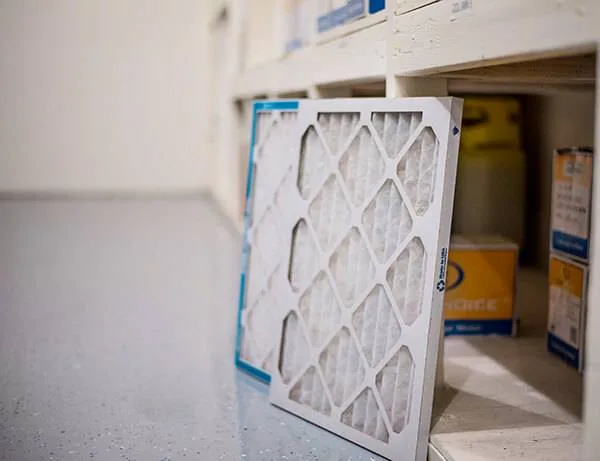
This is the single highest-impact maintenance task any homeowner can perform. In Las Vegas, desert dust loads filters 2 to 3 times faster than in moderate climates. Standard 1-inch filters should be replaced every 30 days during peak summer (June through September). Four-inch media filters can typically go 60 to 90 days. High-MERV filters (MERV 13+) capture more dust but restrict airflow more — confirm your system can handle the added restriction before installing them, as they can reduce airflow enough to cause evaporator coil freeze on equipment not designed for high static pressure.
If you have the filter access point open, look at the air filter slot itself. Dust should only be on the filter, not on the walls of the filter housing. If you see dust bypass around the edges, the filter is not seating correctly or is the wrong size — a common source of coil contamination.
Outdoor Unit Clearing
Walk around your outdoor condenser unit and clear a minimum 24-inch perimeter on all sides and 48 inches above the unit. Remove any debris — leaves, plastic bags, cottonwood fluff, stored items — that has accumulated over winter. Gently rinse the outer fins of the condenser coil with a garden hose from above, letting water run downward through the fins. Do not use a pressure washer, which can bend the aluminum fins and permanently damage the coil. Do not spray from outside the unit inward, which pushes debris further into the coil rather than rinsing it out.
Check the bottom pan of the outdoor unit for standing water or evidence of debris accumulation. The drain holes in the base pan should be clear.
System Test Before Heat Arrives
On a mild morning in April or early May — ideally before temperatures exceed 80°F — turn your system to COOL and set the thermostat 5 degrees below the current indoor temperature. Let it run for 30 to 45 minutes, then check: Is air coming out of all supply registers? Is the outdoor unit running (both the fan and compressor should be operating)? Is the supply air noticeably colder than the room air? Do you hear any unusual sounds — grinding, squealing, clicking, or rattling?
This test takes an hour and gives you invaluable information. If the system is not cooling adequately, you have weeks of mild weather to get it serviced before June. If you wait until the first 100-degree day to discover a problem, you are calling for emergency service.
Thermostat Battery Replacement
Replace thermostat batteries annually during spring maintenance, regardless of how much charge they appear to have. Weak batteries are a surprisingly common cause of thermostat communication errors, ghost trips, and system malfunctions. For digital non-smart thermostats, this is a $3 task. For Wi-Fi-connected smart thermostats, verify the thermostat is connected to your network and responding correctly in the app.
Ductwork Visual Inspection
If you have access to any portion of your ductwork — through an attic hatch, in the garage, or in a crawl space — inspect it visually. Look for disconnected flex duct sections, separated joints at the air handler or trunk lines, torn duct insulation, and visible gaps at branch connections. Any disconnected duct section is heating or cooling your attic, not your home — a significant energy waste and comfort problem that is straightforward to repair.
Thermal duct sealing is beyond DIY scope, but identifying obvious disconnections and getting them repaired before summer is a high-value activity. Duct leakage testing by a professional (using a duct blaster) can identify leakage levels if you suspect significant duct performance issues.
Supply and Return Vent Cleaning
Vacuum all supply and return grilles. Dust-clogged return registers restrict airflow into the system, and blocked supply registers create uneven room temperatures and pressure imbalances. Walk through your home and verify that no furniture, rugs, drapes, or storage boxes are covering supply or return vents. A blocked return is especially problematic — it reduces total system airflow and directly stresses both the blower motor and the compressor.
What Skipping Maintenance Actually Costs in Las Vegas
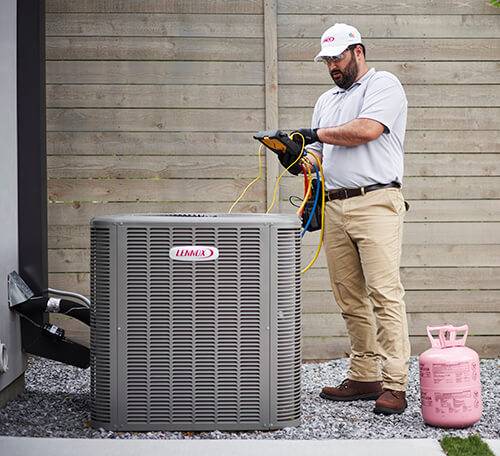
The cost-benefit analysis of annual maintenance is more compelling in Las Vegas than anywhere else in the country because the failure consequences are more severe and more expensive.
Compressor Failure From a Dirty Condenser Coil
A condenser coil that is 25% obstructed by dust reduces airflow and forces the compressor to operate at elevated discharge pressure. At 115°F ambient temperature, the compressor is already working at the limits of its design parameters. Adding the thermal stress of a dirty coil can push compressor head temperature above its protection limit, triggering premature wear on the scroll elements and bearings.
Cost of an annual coil cleaning during a tune-up: included in the $89-$150 tune-up fee.
Cost of a compressor replacement: $1,500 to $3,000 out of warranty.
Capacitor Failure Cascade
A capacitor that is degraded but not yet failed causes hard starts on every compressor cycle. Each hard start subjects the compressor to full-load startup torque without the soft-start current boost the capacitor provides. Over months of daily hard-cycling in Las Vegas summer heat, this degrades the compressor windings and accelerates bearing wear. The eventual failure mode is a compressor that needs hard start on every cycle, then begins drawing elevated amperage, then fails entirely.
Cost of a proactive capacitor replacement during tune-up: $150-$250.
Cost of a compressor replacement triggered by sustained hard-starts: $1,500-$3,000.
For the full picture on capacitor failure — all the warning signs, what the repair costs, and why Las Vegas heat kills capacitors so much faster — see our AC capacitor failure guide.
Frozen Evaporator Coil From a Clogged Filter
A severely restricted air filter reduces airflow over the evaporator coil to the point where the coil temperature drops below freezing. Ice forms on the coil, further blocking airflow, until the system either shuts down on a protection fault or the homeowner notices ice on the refrigerant lines and turns it off. Thawing and restart takes 4 to 6 hours. If the system was run with a frozen coil for extended periods, refrigerant slugging can damage the compressor.
Cost of monthly filter replacements for a summer season: $15-$40.
Cost of a compressor damaged by refrigerant slugging: $1,500-$3,000.
Drain Line Backup and Water Damage
During Las Vegas monsoon season (July through September), HVAC systems remove substantial moisture from incoming outdoor air. A blocked condensate drain line backs up water into the secondary drain pan, and if that fills, water overflows into the ceiling or wall cavity. Water damage to drywall, insulation, and structural framing in a Las Vegas home can cost $2,000 to $10,000+ depending on how long the leak goes undetected.
Cost of drain line clearing and biocide treatment during tune-up: included in service.
Cost of water damage remediation: $2,000-$10,000+.
Tune-Up Cost: What to Expect and What to Watch For
A quality pre-season AC tune-up from a licensed Las Vegas HVAC contractor runs $89 to $150 for a standard single-system home. This should include all 22 inspection points described above, a written report, and any minor adjustments or treatments (drain line flush, coil rinse, tightening electrical connections) included in the base price.
Items that are typically additional:
- Refrigerant recharge: $200-$500 for R-410A, depending on quantity needed
- Proactive capacitor replacement: $150-$250
- Contactor replacement: $200-$400
- Coil cleaning beyond standard rinse (heavy buildup requiring foam cleaner): $75-$150 additional
Beware of very low-priced tune-up offers ($29-$49 "specials"). These often involve a cursory inspection, upselling of unnecessary parts, or a business model that uses the tune-up as a foot-in-the-door to push system replacement. A legitimate tune-up at $89-$150 is worth every dollar. A $39 "tune-up" that does not include refrigerant pressure checks, electrical testing, or coil cleaning is not a tune-up — it is a sales call.
For guidance on finding a trustworthy contractor, see our How to Choose an HVAC Contractor in Las Vegas guide.
Maintenance Schedules by System Age
The recommended maintenance frequency changes as your system ages:
| System Age | Recommended Maintenance | Notes |
|---|---|---|
| Under 3 years | Annual professional tune-up + DIY filter changes | New systems are under warranty. Keep documentation of maintenance performed to protect warranty claims. |
| 3-7 years | Annual professional tune-up + quarterly coil rinse + monthly filter changes | Prime performance window. Consistent maintenance is an investment in maximum system life. |
| 7-12 years | Annual professional tune-up + spring and fall coil cleaning + monthly filter changes | Increased attention to electrical components (capacitor, contactor). Annual replacement of capacitor if it tests near minimum threshold is cost-effective preventive maintenance. |
| 12+ years | Annual professional tune-up + semi-annual coil cleaning + monthly filter changes | At this age, begin budgeting for replacement. Each tune-up should include a frank assessment of remaining system life and a comparison to replacement cost. See our Repair or Replace Decision Guide. |
What the Tune-Up Does NOT Replace
Annual maintenance is essential but not comprehensive. There are system condition issues that a tune-up identifies but cannot fully resolve:
- Aging ductwork: A duct system that is leaking 20-30% needs professional sealing or replacement, not a tune-up. Aeroseal or manual duct sealing is a separate project that pays back significantly in both comfort and energy savings.
- Refrigerant leaks: A recharge restores refrigerant level. Only leak detection and repair prevents future loss. Recurrent low-refrigerant readings despite previous recharges mean the leak was not found and fixed.
- Undersized systems: If your system runs continuously on a 110-degree day and still cannot maintain your setpoint, the system may be undersized for your home's current load — especially if the home has added square footage, windows were replaced with lower-SHGC glass, or the attic insulation has degraded. A Manual J load calculation is the only way to confirm correct system sizing.
- Worn insulation on refrigerant lines: Degraded line set insulation needs replacement, not just inspection. UV-damaged foam insulation in Las Vegas conditions loses its thermal performance and should be replaced every 10-15 years.
For homeowners whose systems are aging and considering whether the cost of continued maintenance plus potential repairs justifies a new system, our Repair or Replace AC Decision Guide provides a complete financial framework. If replacement is in your near future, see our Complete Guide to Replacing Your Air Conditioner in 2026 for everything from refrigerant transitions to installation standards.
Frequently Asked Questions
How much does a Las Vegas AC tune-up cost in 2026?
A comprehensive pre-season tune-up from a licensed Las Vegas HVAC contractor costs $89 to $150 for a single-system home. Larger homes with two systems are typically $150 to $250 total. This price should include a complete 22-point inspection, written report, and minor adjustments at no additional charge. Refrigerant, replacement parts, and major service items such as coil foam cleaning are billed separately. Avoid contractors charging under $50 for a tune-up — the inspection at that price point is rarely comprehensive.
What happens if I skip the tune-up and my system fails in summer?
During June through September, Las Vegas HVAC companies are typically booking non-emergency calls 2 to 4 weeks out. If your system fails during a heat event, you may qualify for same-day emergency service — but emergency diagnostic fees run $150 to $300 and peak-season rates apply to all labor. More critically, if a failure was preventable (low refrigerant that stressed the compressor, a failing capacitor that caused hard-start damage), you are now paying for a more expensive repair that a $150 tune-up would have prevented. The Cooling Company offers priority scheduling for customers on maintenance agreements, which bypasses the peak-season wait for service calls.
Can I clean the condenser coil myself?
You can perform a basic exterior rinse with a garden hose, which removes loose surface dust and debris. For deeper cleaning — removing embedded mineral deposits or heavy dust accumulation — professional coil cleaner and access to the interior of the cabinet is needed. Do not use a pressure washer on condenser coils; high pressure bends the aluminum fins and permanently reduces airflow. Professional coil cleaning restores full heat rejection capacity and is included in a quality tune-up. For the condenser, quarterly DIY rinsing between annual professional cleanings is appropriate and helpful in Las Vegas conditions.
How often do I really need to change my filter in Las Vegas?
In Las Vegas, change your 1-inch filter every 30 days during the summer cooling season (June through September) and every 45 to 60 days during the spring and fall transitional months. Four-inch media filters can typically last 60 to 90 days in summer. If you have pets, live near a construction site, or have recently experienced a haboob, check the filter more frequently. A filter that looks gray and loaded with dust should be replaced immediately regardless of how recently you installed it. A clogged filter costs you in elevated electricity bills, reduced cooling capacity, and potential compressor damage — far more than the $5-$25 cost of a replacement filter.
My system seemed to work fine last summer. Do I still need a tune-up?
Yes, particularly in Las Vegas. "Seemed to work fine" means it did not fail visibly — but capacitors degrade gradually before they fail suddenly, refrigerant leaks slowly before they cause compressor damage, and condenser coils accumulate dust invisibly. A system that tested marginally on a September tune-up has endured five more months of winter cycling, vibration, and component aging since then. It may be significantly more marginal now than it appeared last fall. Pre-season maintenance catches the degradation before it becomes failure.
Does the manufacturer warranty require annual maintenance?
Most major HVAC manufacturer warranties do not explicitly require annual professional maintenance to remain valid. However, some premium extended warranty programs (such as Lennox's extended warranty and Carrier's Edge program) include maintenance requirements. More practically: if a warranty claim arises and there is evidence that the system was not properly maintained (e.g., documentation shows a severely dirty coil, chronically clogged filter, or persistent low refrigerant without leak repair), manufacturers may investigate the operating conditions as a potential contributing cause to the failure. Maintaining documentation of annual tune-ups is good practice regardless of warranty language.
What should I do if the technician recommends a system replacement during the tune-up?
Get the specific reasons in writing — what was found, what it would cost to repair, and what the estimated remaining system life is. Then get a replacement quote from the same contractor and, ideally, one or two competing quotes. A tune-up finding that genuinely points toward replacement is valuable information, not a sales tactic — but you should be able to verify it. Use our Repair or Replace Decision Guide to evaluate the recommendation against objective criteria.
Need HVAC Service in Las Vegas?
The Cooling Company is a family-owned Lennox Premier Dealer serving Las Vegas since 2011. With 780+ Google reviews and a 4.8/5 rating, our technicians provide transparent, upfront pricing with written quotes and back every installation with a workmanship warranty. Licensed, bonded, and insured (NV #0082413).
Call (702) 567-0707 or visit HVAC services, HVAC maintenance, heating, or AC repair for details.