

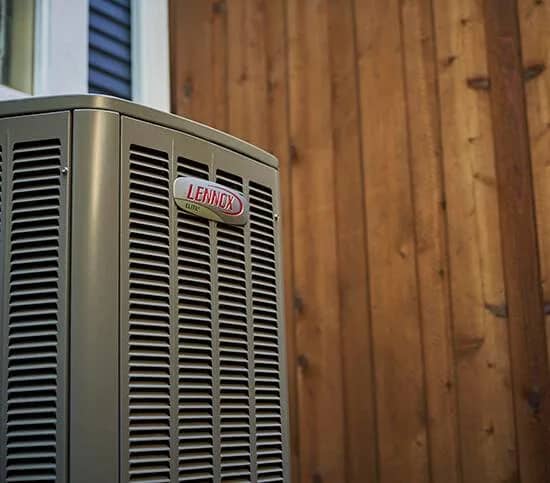
Short answer: If your Lennox air conditioner is 12+ years old (Merit Series), 15+ years old (Elite Series), or 18+ years old (Signature Series), it is likely approaching or past its useful life. Replace immediately if your system runs on R-22 refrigerant, if a single repair costs more than 50% of what a new system would cost, or if you are experiencing frequent breakdowns during Las Vegas cooling season. As a Lennox Premier Dealer, The Cooling Company offers free in-home assessments with Manual J load calculations. Call (702) 567-0707 to schedule yours.
Your Lennox air conditioner has served you well through Las Vegas summers where temperatures regularly exceed 115 degrees Fahrenheit. But every system has a finite lifespan, and knowing exactly when to replace yours rather than pouring more money into repairs is one of the most important financial decisions you will make as a homeowner in the desert Southwest.
This guide is built specifically for Las Vegas homeowners with Lennox systems. We will cover the real-world lifespan of each Lennox series in our extreme climate, the repair-versus-replace math with actual pricing, refrigerant considerations that could force your hand, efficiency gains that pay for themselves, and the 2026 tax credits and rebates that make this year an especially smart time to upgrade. Whether you have an aging Merit unit from 2010 or a Signature system approaching the two-decade mark, you will know exactly where you stand by the end of this article.
For broader context on AC brands and how Lennox stacks up, see our top 25 air conditioning brands for 2026 ranking. And if you already know you need a new system, our complete guide to replacing your air conditioner in 2026 walks through the full installation process.
Key Takeaways
- Lennox lifespan varies by series: Merit Series units typically last 12-15 years, Elite Series 15-18 years, and Signature Series 18-20+ years in Las Vegas conditions. Desert heat, dust, and monsoon exposure reduce these numbers compared to moderate climates.
- Apply the 50% rule: If a single repair costs 50% or more of what a new replacement system would cost, replace rather than repair. This rule applies regardless of your system's age.
- R-22 systems must be replaced: If your Lennox still uses R-22 (Freon), production ended in 2020 and recharge costs now run $100-$200 per pound. Replacement is the only sensible path forward.
- SEER2 upgrades deliver real savings: Upgrading from an old 10 SEER system to a new 14.3 SEER2 base model saves approximately 30% on cooling costs. Going to a 28 SEER Lennox SL28XCV saves over 50%, which translates to $600-$1,500 per year in Las Vegas.
- 2026 offers peak incentives: Federal tax credits up to $2,000 for heat pumps, NV Energy rebates, and Lennox seasonal promotions can reduce your net cost by $1,200-$4,000 or more.
- Las Vegas accelerates wear: Our extreme heat, dust storms, monsoon moisture, and 5-month intense cooling season put roughly double the wear on AC systems compared to moderate-climate regions.
Age Thresholds by Lennox Series: When Each Line Reaches End of Life
Not all Lennox air conditioners are created equal. The company manufactures three distinct product tiers, and each one has different components, build quality, and expected lifespans. Understanding which series you own is the first step in determining whether replacement is on your horizon.
Merit Series: 12-15 Years Typical Lifespan
The Lennox Merit Series is the entry-level product line, including models like the ML14XC1 and the older Merit 14ACX. These units feature single-stage compressors, basic condenser coils, and standard fan motors. They deliver solid, reliable cooling at an affordable price point, but their simpler components have a shorter operational window.
In Las Vegas, Merit Series units tend to land at the lower end of the 12-15 year range. The single-stage compressor runs at full capacity or not at all, which means it cycles on and off frequently during our long cooling season. That constant start-stop pattern creates wear on the compressor and electrical components. Combined with desert dust infiltrating the condenser coil and extreme ambient temperatures pushing the system to its design limits, most Merit units in the Las Vegas valley start showing significant decline around year 10-12.
End-of-life indicators for Merit Series include compressor failure, evaporator coil leaks, and contactor burnout. When these components fail on a 12-year-old Merit unit, repair costs typically approach or exceed the 50% threshold, making replacement the clear choice.
Elite Series: 15-18 Years Typical Lifespan
The Elite Series represents Lennox's mid-tier offering, with models like the EL16XC1, XC17, and the popular EL18XCV. These systems include better compressors (often two-stage), the Lennox Quantum Coil designed to resist corrosion, and more efficient fan motors. The improved build quality translates to longer service life.
The two-stage compressor in most Elite units is a major longevity advantage. By running at a lower capacity most of the time and only ramping to full power during peak demand, the compressor experiences less mechanical stress per operating hour. The Quantum Coil's corrosion resistance also matters significantly in Las Vegas, where pool chemicals, desert alkalinity, and monsoon moisture all attack standard copper-aluminum coils.
In our climate, Elite Series units typically deliver 15-17 years of reliable service with proper maintenance. Watch for declining performance around year 14-15, including longer run times, reduced cooling capacity on extreme heat days, and refrigerant charge issues that indicate slow leaks developing in aging connections and fittings.
Signature Series: 18-20+ Years Typical Lifespan
The Lennox Signature Series is the premium line, featuring variable-speed compressors, the most advanced Quantum Coil designs, variable-speed fan motors, and integration with the Lennox iComfort smart thermostat ecosystem. Models include the XC25, the SL28XCV, and their predecessors. These systems use the best components Lennox manufactures and are built for maximum longevity.
Variable-speed compressors are the key to the Signature Series' extended lifespan. Rather than cycling on and off, they modulate continuously to match cooling demand. This eliminates the mechanical stress of start-stop cycles entirely. In Las Vegas, where AC systems run for five to six months straight, this difference is enormous. A variable-speed compressor operating at 40-60% capacity most of the day experiences a fraction of the wear that a single-stage unit endures.
With diligent maintenance, Signature Series units in Las Vegas can reach and exceed 20 years of service. However, even premium systems eventually reach a point where the efficiency gap between old and new technology makes replacement financially compelling regardless of whether the old system still functions.
Lifespan Comparison Table
| Lennox Series | Typical Lifespan (Las Vegas) | Compressor Type | Key End-of-Life Indicators |
|---|---|---|---|
| Merit Series (ML14XC1, 14ACX) | 12-15 years | Single-stage | Compressor failure, coil leaks, contactor burnout, rising energy bills |
| Elite Series (EL16XC1, XC17, EL18XCV) | 15-18 years | Two-stage | Reduced capacity on peak days, slow refrigerant leaks, control board issues |
| Signature Series (XC25, SL28XCV) | 18-20+ years | Variable-speed | Inverter board degradation, diminished modulation range, efficiency plateau |
For a deeper look at common Lennox issues by model and what repairs typically cost, see our Lennox AC repair guide for Las Vegas.
The 50% Rule Explained: When Repair Costs Cross the Line
The 50% rule is the single most reliable decision framework in HVAC: if a single repair costs 50% or more of what a brand-new replacement system would cost, you replace rather than repair. This rule applies regardless of your system's age because it accounts for the diminishing return on repair investments in aging equipment.
The logic is straightforward. When you spend 50% of replacement cost on a repair, you are getting a fixed version of old equipment with no warranty reset, no efficiency improvement, and a statistical likelihood of another major failure within one to three years. At that price point, the remaining useful life of the repaired system does not justify the expenditure.
Real-World Examples with Lennox Pricing
Example 1: Merit Series Compressor Replacement. Your 13-year-old ML14XC1 needs a new compressor. The repair quote comes in at $2,800-$3,500 including parts, labor, refrigerant recovery and recharge, and the warranty on the repair. A brand-new ML14XC1 system as part of The Cooling Company's Comfort Essentials bundle (condenser, furnace, coil, and thermostat) starts at $5,995. At the low end, that compressor repair is 47% of replacement cost. At the high end, it is 58%. Either way, you are at or past the 50% threshold. Replace.
Example 2: Signature Series Control Board Plus Compressor. Your 16-year-old XC25 experiences both a control board failure and compressor degradation. The combined repair estimate is $4,500-$6,000. A new Signature Comfort bundle starts at $16,495. At $4,500, you are at 27% of replacement cost, which normally favors repair. However, the XC25 is 16 years old and you are replacing two major components. Consider the likelihood of additional failures in the evaporator coil, fan motor, or remaining electrical components over the next two to four years. In this scenario, the age factor tilts the decision toward replacement even though the raw 50% math does not fully trigger.
Example 3: Elite Series Evaporator Coil Leak. Your 10-year-old EL16XC1 has an evaporator coil leak. Repair cost is approximately $1,800-$2,400. A new Comfort Plus bundle with the EL16XC1 starts at $8,025. The repair is 22-30% of replacement cost, and the system is only at the midpoint of its expected life. This is a clear repair situation. Fix the coil and keep running.
The 50% rule should always be paired with the system's age. A repair that costs 40% of replacement on a 14-year-old Merit unit is different from the same ratio on a 7-year-old Elite unit. Use the age thresholds above as your second data point. For more on Lennox system pricing so you can run the math on your own system, visit our pricing breakdown.
Refrigerant Matters: R-22 vs R-410A vs R-454B
The type of refrigerant your Lennox uses can be the single biggest factor forcing a replacement decision, regardless of whether the system itself still functions. Refrigerant availability, cost, and environmental regulations have created clear dividing lines between systems that are worth maintaining and those that are not.
R-22 (Pre-2010 Lennox Systems): Replace Immediately
If your Lennox air conditioner was manufactured before 2010, it almost certainly uses R-22 refrigerant, commonly known as Freon. The EPA completed the full production and import phaseout of R-22 on January 1, 2020. No new R-22 is being manufactured, and the only supply available comes from reclaimed refrigerant recovered from decommissioned systems.
The practical impact is severe. R-22 now costs $100-$200 per pound, and a typical residential AC charge requires 6-12 pounds. A full recharge costs $600-$2,400 just for the refrigerant, not including the labor to find and fix the leak that caused the loss. Compare that to a new system that uses modern refrigerant costing a fraction of that amount per service call.
If your Lennox uses R-22, every service call becomes more expensive, every recharge pushes you closer to the 50% rule, and the system cannot be converted to a different refrigerant without replacing the compressor and other major components at costs that exceed replacement value. The answer is clear: if you have an R-22 Lennox system still running in 2026, replace it. You are borrowing time at an escalating cost. For the full story on the refrigerant transition, read our guide on the R-410A phaseout timeline.
R-410A (2010-2024 Lennox Systems): Serviceable but Transitioning
Lennox systems manufactured between roughly 2010 and 2024 use R-410A refrigerant (also known by the brand name Puron). R-410A replaced R-22 as the industry standard because it does not deplete the ozone layer, though it does have a high global warming potential.
The good news: R-410A is widely available, relatively affordable (typically $30-$60 per pound at current market rates), and will remain serviceable for the foreseeable future. The EPA phasedown of R-410A production began in 2025, but this is a gradual reduction, not a hard cutoff like R-22 experienced. Your R-410A Lennox system will be serviceable for its remaining useful life.
The consideration here is not urgency but opportunity cost. New systems manufactured from 2025 forward are transitioning to R-454B and other next-generation refrigerants. If your R-410A system is approaching its age threshold, you may want to time your replacement to take advantage of the newer, more efficient refrigerant platforms rather than waiting until a breakdown forces the issue.
R-454B (2025+ Lennox Systems): The New Standard
R-454B is the next-generation refrigerant that Lennox and other major manufacturers are adopting for new systems under the EPA's HFC phasedown regulations. It has a global warming potential (GWP) of 466, compared to R-410A's GWP of 2,088, making it significantly better for the environment. The Lennox SL28XCV, the brand's flagship residential air conditioner, already operates on R-454B.
For homeowners replacing an existing system in 2026, choosing a unit that uses R-454B means future-proofing your investment. You will not face another refrigerant transition for the life of the new system, and the long-term serviceability outlook is excellent. This is especially relevant if you are weighing replacement now versus waiting a few more years. The refrigerant landscape strongly favors acting sooner to get onto the R-454B platform.
SEER vs SEER2: What Your Current Efficiency Rating Means for Your Wallet
The efficiency of your current Lennox system, measured in SEER (Seasonal Energy Efficiency Ratio) or the newer SEER2 standard, directly determines how much you are overpaying on electricity every month compared to what a modern system would cost to operate. In Las Vegas, where AC accounts for the majority of summer electricity bills, these efficiency differences translate to hundreds or thousands of dollars annually.
SEER2 replaced the original SEER testing standard in January 2023, as part of the Department of Energy's updated efficiency requirements. The new standard uses higher external static pressure in testing, which produces slightly lower numbers for the same equipment. A system rated at 14 SEER under the old standard is approximately 13.4 SEER2 under the new one. All new equipment is now rated in SEER2, so we will use those numbers for the replacement options below.
Efficiency Upgrade Savings Table
| Your Current System | New Replacement Option | Estimated Efficiency Gain | Estimated Annual Savings (Las Vegas) |
|---|---|---|---|
| 10 SEER (pre-2006) | 14.3 SEER2 (ML14XC1) | ~30% | $600-$900 |
| 10 SEER (pre-2006) | 17.0 SEER2 (EL16XC1) | ~40% | $800-$1,200 |
| 13 SEER (2006-2015) | 18.5 SEER2 (XC17) | ~30% | $500-$800 |
| 13 SEER (2006-2015) | 26.0 SEER2 (XC25) | ~50% | $900-$1,300 |
| 14 SEER (2015-2022) | 28 SEER (SL28XCV) | ~50% | $800-$1,500 |
| 16 SEER (recent Elite) | 28 SEER (SL28XCV) | ~40% | $600-$1,000 |
These estimates are based on Las Vegas-specific usage patterns: a 5-6 month intense cooling season running May through October, average summer electricity bills of $200-$400 per month for a typical 1,800-2,500 square foot home, and NV Energy residential rates. Your actual savings depend on home size, insulation quality, duct condition, thermostat habits, and how many 110-degree-plus days we get in a given year.
The key insight for replacement timing is this: if your system is currently rated at 10-13 SEER and you are spending $300-$400 per month on summer electricity, a new high-efficiency Lennox system could save you $75-$150 per month during cooling season. Over 15 years of ownership, that is $5,600-$13,500 in energy savings alone, which offsets a significant portion of the replacement cost. For a comprehensive look at which Lennox and other systems perform best in our heat, see our guide to the best air conditioners for extreme heat in Las Vegas.
Seven Common Signs Your Lennox Needs Replacing
Beyond age, refrigerant type, and raw efficiency numbers, your Lennox system will give you specific warning signs when it is approaching the end of its useful life. Here are the seven most reliable indicators, each explained in the context of what is happening mechanically and why it points to replacement rather than repair.
1. Rising Energy Bills Without a Change in Usage
If your summer electricity bills have climbed 15% or more year over year without a corresponding change in your usage patterns, thermostat settings, or NV Energy rate structure, your system is losing efficiency. This happens as compressor internals wear, coils develop micro-scale fouling that cleaning cannot fully remove, and refrigerant charges drift due to slow leaks at fittings and joints.
A single bad month can be an anomaly due to an extreme heat wave or a dirty filter. But a consistent upward trend across a full cooling season compared to the prior year, after accounting for rate changes, indicates systemic efficiency loss. On systems older than 10 years, this efficiency loss is often irreversible because it stems from component wear rather than a fixable maintenance issue.
2. Frequent Repairs: Two or More Per Cooling Season
A healthy air conditioning system should not need more than annual maintenance and the occasional one-off repair. If you are calling for service two or more times during a single cooling season (May through October in Las Vegas), your system is signaling cascading component failure. When one major component fails on an aging system, the stress redistributed to remaining components accelerates their decline.
Track your repair history and costs. If you have spent more than $1,000 in total repairs over the past two cooling seasons on a system older than 12 years, run the 50% rule calculation. The cumulative repair spend often exceeds the replacement threshold before homeowners realize it because each individual repair seemed reasonable in isolation.
3. Uneven Cooling with Hot and Cold Spots
When some rooms in your home are comfortable while others remain stubbornly warm, the issue may originate with the AC system rather than your ductwork. As compressors lose capacity, they cannot maintain sufficient refrigerant pressure differential to fully cool the air passing over the evaporator coil. The result is supply air that is warmer than design specifications, which manifests as hot spots in rooms farthest from the air handler.
Before attributing uneven cooling to duct problems, have a technician measure the temperature split across the evaporator coil. A healthy system produces a 16-22 degree Fahrenheit split between return air and supply air. If that split has narrowed to under 14 degrees, the system's cooling capacity has degraded. On older systems, restoring full capacity often requires component replacements that trigger the 50% rule.
4. Indoor Humidity Issues
Proper air conditioning removes humidity as a byproduct of cooling. When a system loses capacity or its compressor short-cycles (runs in too-short intervals), it moves air across the evaporator coil too quickly for adequate moisture removal. You will notice the house feels clammy or sticky even though the thermostat reads the correct temperature.
In Las Vegas, our dry climate means humidity is less of a concern than in coastal cities, but it becomes very noticeable during monsoon season from July through September when outdoor humidity spikes. A failing system that cannot dehumidify properly during monsoon creates an uncomfortable indoor environment that no thermostat adjustment can fix. If your Lennox used to handle monsoon humidity without issue and now struggles, that is a capacity and cycling problem indicative of system decline.
5. Unusual Noises: Grinding, Banging, or Squealing
Modern Lennox systems are designed to operate quietly, especially the Elite and Signature Series with their variable-speed and two-stage components. When you start hearing grinding (bearing failure in the compressor or fan motor), banging (loose or broken internal components), or squealing (belt issues on older systems or failing motor bearings), these are not annoyances to tolerate. They are the sounds of mechanical failure in progress.
Compressor grinding in particular is a terminal diagnosis. Once compressor bearings begin failing, metal-on-metal contact contaminates the refrigerant system with debris, which can damage the expansion valve and evaporator coil even if you replace the compressor. On a system older than 12 years, compressor noise almost always means it is time for full system replacement rather than trying to salvage individual components.
6. System Runs Constantly but Never Satisfies the Thermostat
If your Lennox runs continuously without cycling off, yet the indoor temperature never reaches the thermostat setpoint, the system has lost sufficient capacity to meet the cooling load. In Las Vegas summer, this is most apparent on afternoons when outdoor temperatures exceed 110 degrees Fahrenheit. A properly sized and functioning system should maintain setpoint even at peak outdoor temperatures, though it may run continuously to do so.
The distinction is important: running continuously and maintaining temperature is normal on extreme days. Running continuously and failing to maintain temperature is a problem. The cause is usually compressor degradation, low refrigerant due to leaks, or a system that was undersized for the home's current cooling load (which can happen after renovations, room additions, or window changes). A technician can diagnose which scenario applies, but on older systems, the answer frequently involves replacement.
7. Visible Rust, Corrosion, or Refrigerant Oil Stains
Inspect your outdoor condenser unit periodically. Visible rust on the cabinet, corrosion on the copper refrigerant lines, or dark oil stains around fittings and the compressor all indicate advanced system deterioration. Refrigerant oil stains specifically signal active leaks, the oil travels with the refrigerant and deposits where the refrigerant escapes.
In Las Vegas, the outdoor unit endures UV radiation, extreme temperature cycling, monsoon moisture, and alkaline dust. These environmental factors attack metal components aggressively. Lennox's Quantum Coil (available on Elite and Signature Series) resists corrosion better than standard copper-aluminum coils, but even these eventually succumb after 15-18 years of desert exposure. If you see significant corrosion on the condenser coil fins or the refrigerant connections, the system's integrity is compromised beyond what a repair can restore.
What to Replace Your Lennox WITH: Upgrade Paths and Pricing
Once you have determined that replacement is the right call, the next question is which Lennox system to upgrade to. The answer depends on your current system, your budget, and your comfort goals. Below are the most common upgrade paths using The Cooling Company's complete system bundles, which include the outdoor condenser, indoor furnace, evaporator coil, and thermostat. All pricing reflects installed systems, not equipment-only costs.
For detailed pricing breakdowns and financing options on all Lennox models, visit our Lennox system pricing page.
Old Merit to New ML14XC1 (14.3 SEER2) - Comfort Essentials Bundle
Starting at $5,995
This is the most straightforward and affordable replacement path. If your aging Merit Series unit is at end of life, the current ML14XC1 delivers the same reliable, single-stage cooling with updated components, modern refrigerant compatibility, and improved efficiency that meets current federal minimum standards. You get a brand-new system with a full manufacturer warranty, and your monthly energy bills drop immediately. This bundle is ideal for homeowners on a budget who want dependable cooling without premium features.
Old Merit to New EL16XC1 (17.0 SEER2) - Comfort Plus Bundle
Starting at $8,025
Stepping up from a Merit to an Elite Series EL16XC1 represents a significant upgrade in both efficiency and comfort. The two-stage compressor runs at low capacity during mild conditions and full capacity during peak heat, reducing energy use and temperature swings. The Lennox Quantum Coil resists the corrosion that Las Vegas conditions inflict on standard coils. This is the sweet spot for homeowners who want meaningfully better efficiency and durability without the premium price of top-tier systems.
Old Elite to New XC17 (18.5 SEER2) - Comfort Elite Bundle
Starting at $11,545
For homeowners replacing an aging Elite Series unit, the XC17 maintains the two-stage comfort you are accustomed to while delivering higher efficiency. The additional SEER2 points translate to lower operating costs that compound over the system's 15-18 year expected life. This bundle includes matched components optimized to work together, ensuring the rated efficiency numbers translate to real-world performance in your home.
Old Signature to New XC25 (26.0 SEER2) - Signature Comfort Bundle
Starting at $16,495
If you have experienced the superior comfort of a Signature Series variable-speed system and cannot imagine going back to staging, the XC25 is the natural upgrade path. With a 26.0 SEER2 rating, it delivers exceptional efficiency through precise variable-speed operation that continuously modulates to match your home's cooling demand. The result is whisper-quiet operation, rock-steady temperatures, and excellent humidity control during monsoon season.
Any System to New SL28XCV (28 SEER) - Total Home Comfort Bundle
Starting at $21,995
The Lennox SL28XCV is the pinnacle of residential air conditioning technology. At 28 SEER, it operates on the next-generation R-454B refrigerant and delivers the highest efficiency rating available in a residential Lennox system. For homeowners who want the absolute best, lowest operating costs, smallest environmental footprint, and maximum long-term value, this is the system. The energy savings alone can reach $1,500 per year compared to a 10 SEER system, which recovers a substantial portion of the premium over the system's 18-20+ year expected lifespan.
To understand why Lennox systems in particular are well-suited for Las Vegas, see our articles on why we recommend Lennox and the benefits of Lennox systems. For heat pump alternatives, our Lennox heat pump guide covers dual-mode systems that both cool and heat.
2026 Tax Credits and NV Energy Rebates
The financial incentives available in 2026 make this one of the best years in recent memory to replace an aging air conditioning system. Between federal tax credits, utility rebates, and manufacturer promotions, homeowners can reduce their net replacement cost by $1,200 to $4,000 or more depending on the system selected.
Federal Tax Credits (Section 25C - Energy Efficient Home Improvement Credit)
Heat Pumps: Up to $2,000 per year for qualifying heat pump systems that meet or exceed CEE Tier 1 efficiency levels. This is a tax credit, not a deduction, meaning it reduces your tax liability dollar for dollar. If you choose a Lennox heat pump system for both cooling and heating, this credit applies. Visit our guide to Lennox federal tax credits for heat pumps for eligibility details.
Central Air Conditioners (non-heat-pump): Up to $600 per year for qualifying central AC systems that meet the ENERGY STAR Most Efficient criteria. This applies to high-efficiency cooling-only systems like the XC25 and SL28XCV when installed as part of a split system with a gas furnace.
Note: These credits are annual limits, not lifetime limits. If you replaced your furnace last year and are replacing your AC this year, you can claim both credits in their respective tax years.
NV Energy Rebates
NV Energy offers rebates for high-efficiency HVAC equipment installed by licensed contractors within their service territory, which covers the entire Las Vegas valley. Rebate amounts vary by system type and efficiency rating but typically range from $200 to $1,000 for qualifying central air conditioners and heat pumps. Check the NV Energy PowerShift rebate program at the time of purchase, as program details and amounts update periodically.
Lennox Seasonal Rebates
Lennox runs seasonal rebate promotions throughout the year, typically offering $200-$1,200 in manufacturer rebates depending on the system purchased and the time of year. Spring and fall tend to have the strongest promotions as manufacturers incentivize purchases outside of peak summer demand. As a Lennox Premier Dealer, The Cooling Company passes the full rebate directly to the homeowner. For current Lennox rebate offers in Las Vegas, check our promotions page.
Combined Savings Example
| Incentive Source | Cooling-Only System | Heat Pump System |
|---|---|---|
| Federal Tax Credit | Up to $600 | Up to $2,000 |
| NV Energy Rebate | $200-$500 | $300-$1,000 |
| Lennox Seasonal Rebate | $200-$800 | $200-$1,200 |
| Total Potential Savings | $1,000-$1,900 | $2,500-$4,200 |
These incentives are subject to change and have specific eligibility requirements. Your Cooling Company comfort advisor will walk through all applicable credits and rebates during your free in-home assessment so you know exactly what you qualify for before making a decision.
Las Vegas-Specific Factors That Accelerate AC Wear
National averages for air conditioner lifespan, repair frequency, and energy consumption do not apply in Las Vegas. Our climate imposes conditions that accelerate component wear and shorten system life compared to moderate-climate regions. Understanding these factors helps you calibrate your replacement timeline accurately.
Extreme Heat Stress on Compressors
When outdoor temperatures exceed 110 degrees Fahrenheit, which happens regularly from June through September in the Las Vegas valley, your compressor operates at or near its maximum design capacity for extended periods. The higher the ambient temperature, the harder the compressor must work to reject heat from the refrigerant. At 115 degrees, a compressor designed for 95-degree conditions is operating well beyond its comfort zone, with elevated internal temperatures, higher refrigerant pressures, and increased mechanical stress on bearings and valves.
This sustained high-load operation is the primary reason AC systems in Las Vegas have shorter lifespans than identical systems in Phoenix (slightly less extreme peak temps with marginally better overnight cooling) or coastal California (dramatically lower cooling demands). Every summer day above 110 degrees takes a measurable toll on compressor longevity.
Desert Dust and Monsoon Season
Las Vegas valley dust is not ordinary dust. It contains high concentrations of alkaline minerals, construction debris particulates, and fine desert sand that infiltrate condenser coils and restrict airflow. During dust storms and the monsoon season from July through September, this material combines with moisture to form a corrosive paste that attacks copper tubing, aluminum fins, and electrical connections.
Regular condenser coil cleaning mitigates this damage, but it cannot eliminate it entirely. Over 12-15 years, the cumulative effect of thousands of dust exposure events degrades coil efficiency and promotes the micro-corrosion that eventually leads to refrigerant leaks. Systems without the corrosion-resistant Quantum Coil (Lennox Merit Series and older models) are particularly vulnerable.
Attic Temperature Impact
Many Las Vegas homes have air handlers, evaporator coils, and ductwork installed in the attic. During summer, attic temperatures routinely reach 150 degrees Fahrenheit or higher. Your HVAC equipment sitting in a 150-degree environment works significantly harder than equipment in a conditioned mechanical room. The evaporator coil must overcome the heat radiating from the attic into the duct system, electrical components age faster at elevated temperatures, and the temperature differential between the attic and conditioned space creates thermal stress on connections and seals.
If your Lennox system's indoor components are attic-mounted, subtract one to two years from the expected lifespan ranges in the table above. Attic-mounted systems in Las Vegas consistently reach end of life sooner than garage-mounted or closet-mounted systems.
UV Degradation on Outdoor Units
Las Vegas receives approximately 294 sunny days per year with intense UV radiation at our desert elevation. This UV exposure degrades rubber seals, plastic components, wire insulation, and the protective coatings on your outdoor condenser unit. Over 15-20 years, UV degradation weakens components that were never designed for this level of solar exposure, creating failure modes that are uncommon in less sunny regions.
A shade structure over the outdoor unit can reduce UV damage and improve efficiency by lowering the ambient temperature around the condenser, but the unit still needs adequate airflow clearance on all sides. Talk to your installer about proper shading that does not restrict airflow.
Power Surge Damage from Summer Grid Stress
Las Vegas summers put extreme demand on the electrical grid. When NV Energy's system is under peak load, voltage fluctuations and brief power surges are more common. These electrical events stress capacitors, contactors, and control boards in your AC system. A single significant surge can damage a control board outright. Repeated minor fluctuations degrade capacitors over time, leading to the hard-start issues and compressor stress that precede failure.
A whole-home surge protector is an inexpensive investment that protects all of your electrical equipment, including your HVAC system. If you do not have one, ask about adding surge protection when you schedule your replacement assessment.
The Five-Month Intense Cooling Season
In moderate climates, residential AC systems run three to four months per year with significant portions of those months at partial load. In Las Vegas, air conditioning runs intensively from May through September, with meaningful cooling demand continuing into October and often starting in April. That is five to six months of heavy operation, with June through September demanding near-continuous runtime during daylight hours.
This extended season means a Las Vegas air conditioner accumulates roughly twice the operational hours per year as the same system in a city like Denver or Nashville. When manufacturers quote a 15-year expected lifespan, they are typically basing that on national average usage. In Las Vegas, adjust those numbers downward by 15-25% to account for our disproportionate cooling load.
Making the Decision: Repair vs Replace Checklist
Use this checklist to evaluate where your Lennox system stands. If you answer yes to three or more of these questions, replacement is almost certainly the better financial decision than continuing to repair.
- Is your system 12+ years old (Merit), 15+ years old (Elite), or 18+ years old (Signature)? Systems past these thresholds have exceeded the majority of their useful life and face increasing failure probability each year.
- Does your system use R-22 refrigerant? The cost of maintaining an R-22 system in 2026 is prohibitive, and it will only get worse. This alone justifies replacement regardless of system age.
- Has a single repair been quoted at 50% or more of replacement cost? The 50% rule is the industry standard for a reason. Do not invest half the cost of a new system into old equipment.
- Have you needed two or more repairs in the past 12 months? Cascading component failures signal a system entering its terminal decline phase.
- Are your summer energy bills 15%+ higher than last year with similar usage? Irreversible efficiency loss means you are paying more for less cooling every month the old system runs.
- Is your system rated below 14 SEER? The efficiency gap between your system and even a base-model replacement is large enough to generate meaningful monthly savings.
- Does your system run constantly on hot days without maintaining setpoint? Lost cooling capacity on an aging system typically cannot be restored to factory specifications.
- Have you noticed unusual noises, visible corrosion, or oil stains on the outdoor unit? These are physical evidence of mechanical deterioration that repair cannot reverse.
- Is your system's indoor equipment located in an unconditioned attic? Attic-mounted systems in Las Vegas experience accelerated aging. Apply the shorter end of the lifespan range for your series.
- Are you missing out on $1,200-$4,000+ in available tax credits and rebates? The 2026 incentive landscape makes replacement more affordable than in prior years. Waiting may mean missing these windows.
Scoring:
- 0-2 yes answers: Your system likely has remaining useful life. Invest in a professional tune-up and continue monitoring. Schedule an HVAC maintenance visit to optimize what you have.
- 3-5 yes answers: Replacement is strongly recommended. You are past the point where repair investments generate a positive return. Start planning your replacement and take advantage of current incentives.
- 6+ yes answers: Replace as soon as possible. Every month you delay costs you money in wasted energy, unnecessary repair risk, and potential loss of rebate windows. Call today to schedule your free assessment.
When NOT to Replace: Honest Advice
Integrity matters, and we want you to make the right decision, even if that decision is to keep your current system. Here are situations where repair is the better choice:
- Your system is under 8 years old with a minor failure. A capacitor, contactor, or fan motor replacement on a relatively young system is straightforward, affordable, and leaves you with many years of remaining life. Fix it.
- Your system is under warranty. Lennox offers 5-year base warranties and up to 10-year extended warranties on qualifying systems with proper registration. If your repair is covered, take advantage of the warranty. That is what it is for.
- The repair is under 30% of replacement cost on a mid-life system. An Elite Series at year 10 with a $1,500 repair is still well within its expected operating window. Repair, continue maintaining, and reassess in three to five years.
- Your system still uses R-410A and performs well. If your R-410A Lennox is under 10 years old, keeps the house comfortable, runs quietly, and your energy bills are stable, there is no urgency to replace. Enjoy the system you have and plan ahead for eventual replacement.
An honest assessment is the foundation of good HVAC decision-making. When you schedule a free assessment with The Cooling Company, our technicians will tell you straight whether your system is worth repairing. We would rather earn your trust with honest advice than sell a system you do not need yet. For more on how Lennox approaches HVAC excellence and how Lennox systems are built, explore our Lennox resource articles.
Frequently Asked Questions
How long does a Lennox air conditioner last?
In Las Vegas, Lennox Merit Series units typically last 12-15 years, Elite Series 15-18 years, and Signature Series 18-20+ years. Desert heat, dust, and monsoon exposure shorten these lifespans compared to moderate climates where the same systems might last 2-3 years longer. Regular maintenance — including monthly filter changes and quarterly coil cleanings — is essential to reaching the upper end of these ranges.
Is it worth repairing a 15-year-old Lennox AC?
It depends on the series and the repair cost. A 15-year-old Merit Series unit is past its expected lifespan and repairs are rarely worth it. A 15-year-old Elite Series is nearing end of life — only invest in repairs under $1,000. A 15-year-old Signature Series still has useful life remaining if the repair cost stays under 50% of replacement cost. Always factor in your current system's SEER rating versus what a new system would deliver in energy savings.
What does it cost to replace a Lennox air conditioner in Las Vegas?
Complete Lennox system replacements in Las Vegas range from $5,995 for a Comfort Essentials bundle (ML14XC1 at 14.3 SEER2) to $21,995+ for a Total Home Comfort bundle (SL28XCV at 28 SEER). These prices include the outdoor condenser, indoor furnace, evaporator coil, thermostat, and professional installation. For detailed pricing, see our Lennox system pricing guide.
Should I replace my R-22 Lennox system?
Yes, immediately. R-22 (Freon) production ended in 2020. The remaining supply is reclaimed from decommissioned systems and costs $100-$200 per pound — a full recharge runs $600-$2,400 just for refrigerant. Every service call will get more expensive as supply dwindles. Converting an R-22 system to modern refrigerant requires replacing the compressor, coils, and refrigerant lines, which costs nearly as much as a new system. Replacement is the only financially sensible path.
What SEER2 rating should I upgrade to?
In Las Vegas, where AC runs 2,500-3,500 hours per year, higher efficiency pays back faster than in moderate climates. A 17.0 SEER2 system (like the EL16XC1) is the sweet spot for budget-conscious buyers — saving $200-$250 annually over the 14.3 minimum. For maximum savings, the 28 SEER SL28XCV saves $600-$1,500 per year. Factor in the $2,000 federal heat pump tax credit when evaluating premium options, as it significantly closes the price gap.
Are there tax credits for replacing my Lennox AC in 2026?
Yes. Federal tax credits under Section 25C offer up to $600 for qualifying central AC systems and up to $2,000 for qualifying heat pump systems. NV Energy rebates add $200-$1,000 depending on system efficiency. Lennox seasonal rebates contribute another $200-$1,200. Combined, these incentives can reduce your net replacement cost by $1,200-$4,200. Credits are claimed on IRS Form 5695 with your annual tax return.
Ready to Explore Your Replacement Options?
As a Lennox Premier Dealer, The Cooling Company provides free in-home assessments with Manual J load calculations. We will evaluate your current system, discuss your options, and give you honest, upfront pricing with no pressure and no hidden fees.
Whether you are ready to replace today or simply want a professional opinion on your system's remaining life, we are here to help. Our comfort advisors will walk you through every option, explain the tax credits and rebates you qualify for, and give you a clear picture of what each upgrade path means for your comfort and your budget.
Call (702) 567-0707 or visit our AC installation page to schedule your free assessment. For heat pump options that provide both cooling and heating, see our heat pump installation page.
Need HVAC Service in Las Vegas?
The Cooling Company provides expert HVAC service throughout Las Vegas, Henderson, and North Las Vegas. Our licensed technicians deliver honest assessments, upfront pricing, and reliable results.
Call (702) 567-0707 or visit HVAC services, HVAC maintenance, heating, or AC repair for details.